
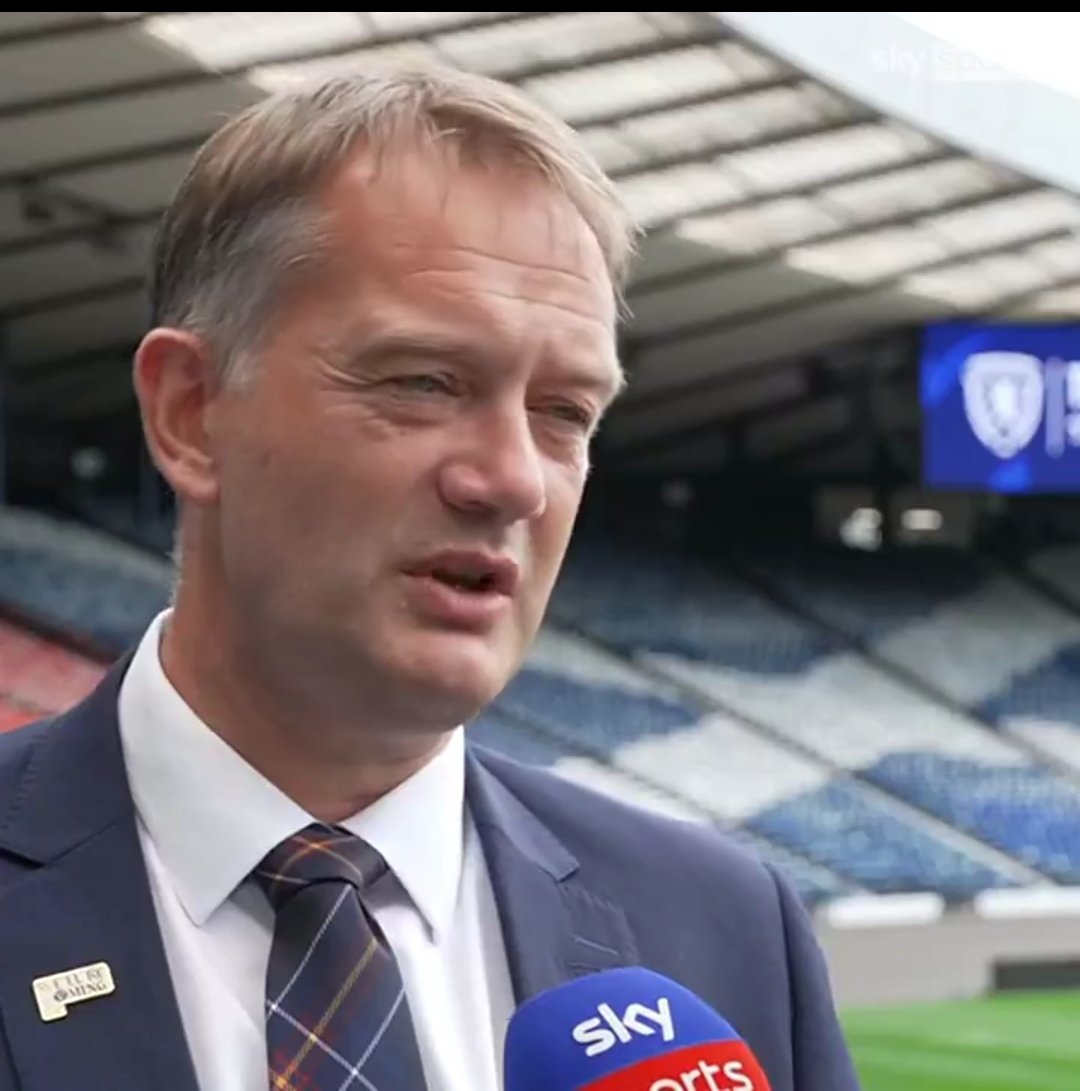
Scottish football could be on the verge of a major transformation after Scottish FA Chief Executive Ian Maxwell backed calls to criminalise pitch invasions following the chaotic scenes at Ibrox Stadium during the explosive Scottish Cup quarter-final between Rangers F.C. and Celtic F.C. in March 2026.
The dramatic Old Firm showdown ended in Celtic progressing via penalty shoot-out, but the football itself was quickly overshadowed by shocking scenes after the final whistle. Supporters from both sides flooded onto the pitch, sparking clashes, safety concerns, and widespread condemnation from across the game. What should have been remembered as one of the season’s most intense cup ties instead became another dark chapter in Scottish football’s growing fan behaviour crisis.
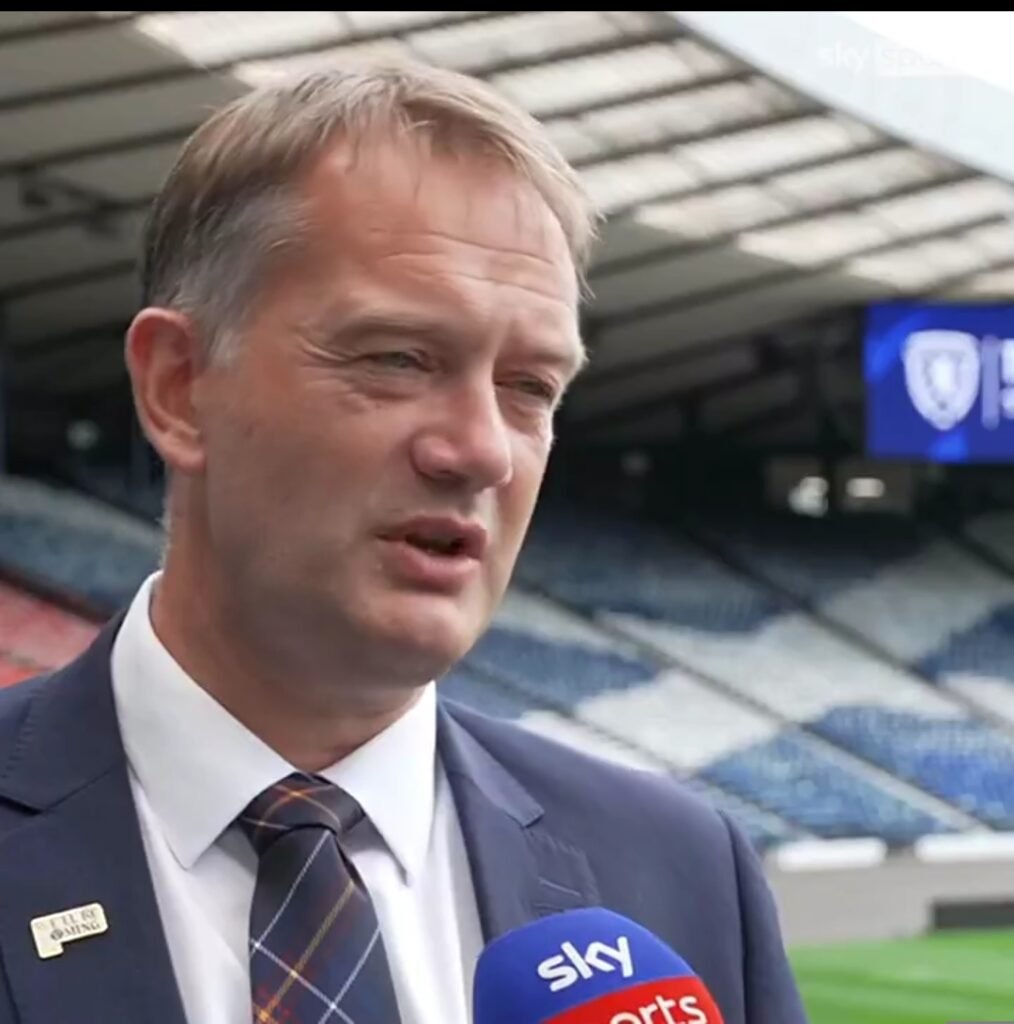
Speaking candidly in an interview with Sky Sports Scotland, Maxwell admitted the problem is becoming impossible to ignore.
“Pitch incursions are becoming more prevalent… We need to update our rules,” he explained.
His comments have now ignited a nationwide debate over whether Scotland should finally follow England and other countries by making pitch invasions a criminal offence.
The Day Ibrox Descended Into Chaos
The scenes at Ibrox stunned viewers across the UK. Following Celtic’s dramatic victory, hundreds of supporters breached barriers and stormed onto the playing surface while players, officials, and coaching staff were still on the pitch.
Stewards and police struggled to regain control as rival fans confronted one another in dangerous and highly volatile situations. Videos circulating online showed supporters running across the field, taunting rivals, and ignoring repeated warnings from security personnel.
Police Scotland later described the behaviour as “shameful,” confirming several arrests and launching investigations in cooperation with both clubs and the Scottish FA.
For many observers, the incident crossed a line.
Pitch invasions have increasingly become part of the spectacle in modern football, especially during emotional derby matches or dramatic title celebrations. However, the Ibrox disorder highlighted just how quickly celebrations can turn into major security threats.
Players were visibly uncomfortable during the chaos, while officials were forced to rush individuals away from confrontation zones. Families inside the stadium also reported fear and confusion as disorder spread through sections of the ground.
The Scottish FA later issued a strong statement condemning the invasions and reaffirming its commitment to player and supporter safety.
Ian Maxwell’s Strongest Warning Yet
Maxwell’s intervention marks one of the clearest acknowledgements yet from Scottish football authorities that current punishments are not working.
The SFA chief confirmed that an independent review into fan behaviour was commissioned immediately after the Ibrox incident and is expected to be published within weeks.
The findings could shape sweeping reforms across Scottish football.
Maxwell suggested that criminalisation should now be seriously considered, particularly as repeated invasions continue to place players, referees, police officers, stewards, and ordinary supporters at risk.
Importantly, however, he stressed that legislation alone would not solve the issue.
According to Maxwell, the responsibility must be shared between football authorities, clubs, police, stewards, and the wider legal system. He also hinted that tougher football-specific sanctions could soon be introduced, including stronger punishments for clubs whose supporters repeatedly invade pitches.
The SFA is reportedly exploring measures such as:
- Expanded football banning orders
- Increased fines for clubs
- Improved stewarding requirements
- Harsher disciplinary sanctions
- Stricter ticketing systems
- Greater use of CCTV and identification technology
Maxwell also referenced concerns surrounding tailgating — supporters entering grounds without valid tickets — as part of the wider problem affecting stadium safety.
Why Pitch Invasions Are Becoming More Common
The rise in pitch invasions across Scotland has alarmed football authorities over the last few seasons.
Emotional late winners, title celebrations, cup shocks, and Old Firm clashes have increasingly triggered spontaneous incursions. Social media has arguably made the situation worse, with viral clips often glamorising fans running onto the pitch.
For younger supporters in particular, such moments can appear exciting rather than dangerous.
The intensity of the Old Firm rivalry adds another layer entirely. Matches involving Rangers and Celtic carry enormous historical and emotional significance, meaning tensions can escalate rapidly — especially in knockout fixtures with huge consequences.
Security teams often struggle to react once large numbers of supporters move simultaneously.
Alcohol consumption, organised Ultra groups, and broader issues surrounding respect for authority have also been highlighted as contributing factors.
Scottish football has dealt with fan disorder before, but many believe the current trend is becoming increasingly difficult to contain.
England’s Model Could Become Scotland’s Blueprint
One of the key talking points emerging from Maxwell’s comments is whether Scotland should adopt laws similar to those already used successfully in England.
In England, entering the pitch without authorisation is a criminal offence under football legislation. Offenders can face arrests, fines, stadium bans, and lengthy football banning orders preventing attendance at matches for years.
Those laws were strengthened after several high-profile incidents involving players being attacked or confronted by supporters.
Many believe Scotland has reached the point where similar legislation is necessary.
Maxwell appears open to that approach, although he stopped short of demanding immediate government intervention. Instead, he insisted football should attempt to “take charge of its own domain” while maintaining good relationships with the Scottish Government.
That balance may prove crucial in the months ahead.
The Human Cost Often Gets Forgotten
While pitch invasions are sometimes dismissed as harmless celebrations, authorities insist the risks are very real.
Players can be assaulted, pushed, or trapped in dangerous crowd surges. Referees and officials regularly face verbal abuse and potential physical threats during disorder.
Stewards and police officers are placed directly in harm’s way when trying to restore order, while innocent supporters — including children and families — can easily become caught up in confrontations.
The Ibrox incident demonstrated how quickly situations can spiral once rival fans mix on the field.
Beyond immediate safety concerns, repeated invasions also damage the image of Scottish football internationally.
Sponsors, broadcasters, and commercial partners want stable, family-friendly environments. Scenes of chaos undermine efforts to market the Scottish game positively around the world.
There are also fears that continued disorder could discourage families from attending matches altogether.
Could Clubs Face Even Tougher Punishments?
Another major issue likely to emerge from the independent review is whether clubs themselves should face stricter accountability.
The idea of “strict liability” has long been debated in Scottish football. Under such rules, clubs could be held directly responsible for supporter misconduct regardless of whether they personally encouraged it.
Possible punishments could include:
- Heavy financial penalties
- Partial stadium closures
- Point deductions
- Reduced ticket allocations
- Competition sanctions
The debate intensified after the infamous 2016 Scottish Cup final pitch invasion involving Hibernian F.C. supporters.
At the time, many argued Scottish football missed an opportunity to introduce tougher long-term reforms.
Maxwell now appears willing to revisit those conversations if current measures continue failing.
Rangers and Celtic Under Pressure
Both Rangers and Celtic condemned the scenes following the Ibrox disorder, but many supporters believe stronger action is now needed.
With two of the largest fanbases in Britain, both clubs carry enormous responsibility in shaping supporter culture.
Authorities are expected to push for tougher identification systems, lifetime bans for repeat offenders, and greater cooperation between clubs and police investigations.
The pressure on both clubs will only increase if future incidents occur.
For ordinary supporters, the overwhelming message is simple: passionate support is encouraged, but crossing onto the pitch cannot become normal behaviour.
Most fans attend matches responsibly. However, the actions of a minority continue threatening the reputation and safety of the wider football community.
A Defining Moment for Scottish Football
Scottish football now stands at a crossroads.
The independent review commissioned after the Ibrox chaos could become one of the most important documents for the game’s future governance in years.
Ian Maxwell’s willingness to openly support criminalisation shows the seriousness with which authorities are now viewing the issue. Whether that leads to genuine long-term reform remains to be seen.
What is clear is that patience inside the game is running out.
The scenes witnessed at Ibrox cannot continue becoming recurring headlines if Scottish football hopes to grow commercially, improve its international image, and provide safe environments for supporters.
The coming months could determine whether the sport successfully modernises its approach to fan behaviour — or whether further incidents force even more drastic intervention later down the line.
Pitch invasions are not inevitable.
With stronger laws, smarter security, better education, and collective responsibility from clubs, authorities, and supporters alike, Scottish football still has an opportunity to reclaim control.
The beautiful game in Scotland remains one of passion, rivalry, atmosphere, and history.
But as the Ibrox chaos demonstrated, passion without boundaries can quickly become dangerous.
Now, the sport must decide how far it is willing to go to protect its future.