
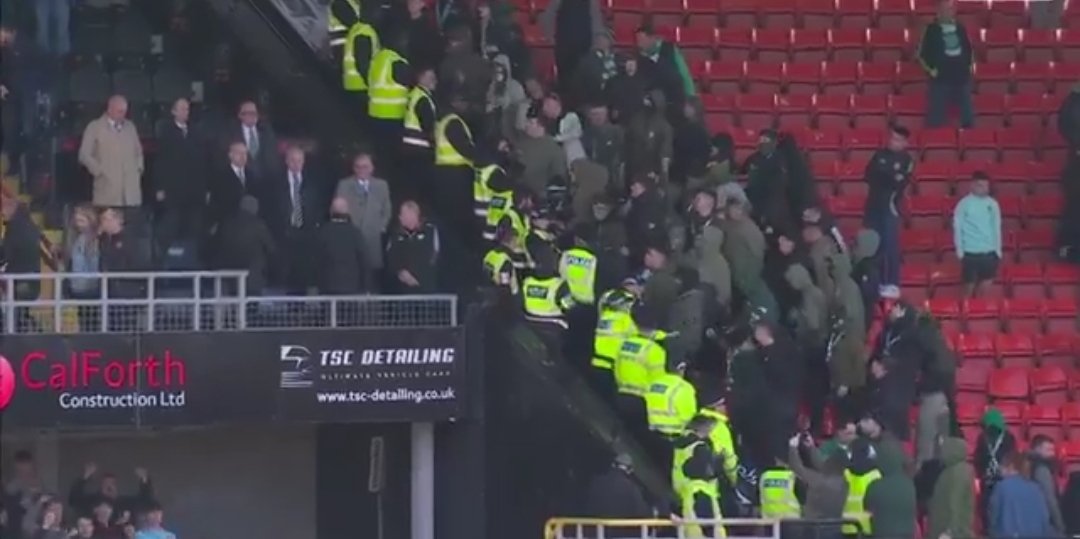
In a moment that sent shockwaves through Scottish football, Celtic’s travelling supporters unleashed their frustration in dramatic fashion during a dismal 2-0 defeat away to Dundee United at Tannadice Park.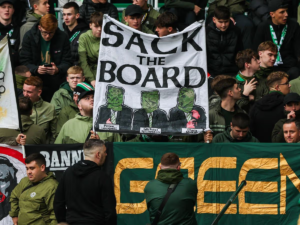
As the final whistle blew on yet another damaging result, the away end erupted—not just in disappointment, but in outright fury directed squarely at the club’s board members seated just yards away in the directors’ box. It was raw, loud, and impossible to ignore.
Footage from Sky Sports Scotland quickly went viral, capturing hundreds of green-and-white supporters belting out “SACK THE BOARD!” with venomous intensity. The chants echoed around the compact stadium, aimed directly at key figures including chief executive Michael Nicholson and chairman Peter Lawwell. With the board in clear view, the protest felt deeply personal—fans staring down those they hold responsible for the club’s decline.
On the pitch, the performance only added fuel to the fire. Dundee United took control with a commanding 2-0 victory, exposing Celtic’s weaknesses across the field. The attack lacked cutting edge, the midfield was overrun, and defensive lapses proved costly. It marked another setback in what has become a worrying run of form, with crucial points dropped in a title race that once looked firmly within reach.
But the real story unfolded after the match. The chants weren’t spontaneous—they were the culmination of long-standing frustration. Supporters have increasingly criticised the board for what they see as complacency: holding significant financial reserves while failing to adequately strengthen the squad. Concerns over recruitment, lack of ambition in the transfer market, and strained relations with fans have all contributed to the growing unrest.
This is far from the first protest. Previous demonstrations have included banners, pitch disruptions, and vocal opposition at club meetings. However, the scenes at Tannadice felt different—more direct, more intense, and far harder for the hierarchy to dismiss. For once, there was no distance between decision-makers and the discontent—they were right there, hearing every word.
Reaction on social media was immediate. The footage spread rapidly, drawing thousands of views and sparking debate across the football world. Rangers supporters mocked the situation, while neutral observers pointed to the irony of such a passionate fanbase turning its anger inward.
Within the Celtic support, opinion remains divided. Some believe the protests are necessary to force change, arguing that the board has ignored concerns for too long. Others warn that constant internal conflict risks destabilising the team further, insisting players and coaching staff must also be held accountable.
The pressure on the leadership continues to build. Questions now loom over how the club will respond—whether through increased investment, structural changes, or potential departures at board level. While Celtic remain financially strong, the growing disconnect between the supporters and those in charge is becoming harder to contain.
Ultimately, the scenes at Tannadice were about more than just one defeat. They represent a breaking point in a deeper conflict—between a fanbase demanding excellence and a leadership accused of settling for less.
As Celtic prepare for their next fixture, one thing is certain: the message from the stands has been delivered loud and clear. The divide is growing, the pressure is mounting, and the calls for change are only getting louder.