
Eddie Howe Departs Newcastle United: The End of an Era at St James’ Park
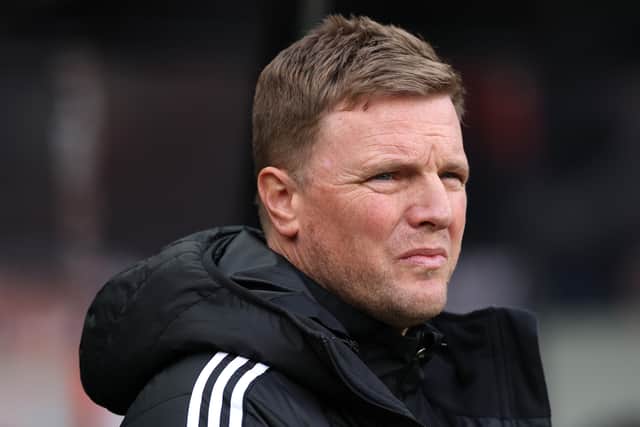
As of July 30, 2026, Newcastle United find themselves at a pivotal crossroads following the departure of head coach Eddie Howe. The 48-year-old has left his role with immediate effect after nearly five years in charge, a decision confirmed through multiple sources including Sky Sports News and reports from The Athletic. What began as a period of reflection has culminated in one of the most significant managerial changes in the modern history of the club.
The announcement comes after intensive discussions between Howe and the club’s hierarchy over the past 48 hours. Critically, sources indicate that Howe himself initiated the process of a potential exit several weeks earlier. While he had committed to remaining at the club following last season’s conclusion, a change of heart has led him to step away. He has informed the board of his desire to take a break from football management, bringing an amicable but abrupt end to his tenure. Newcastle United have yet to issue an official statement as of this morning, but the decision is understood to be final.
Howe’s final match in charge was a sobering 4-1 defeat to Championship side Bristol City in a pre-season friendly on Wednesday evening. The result offered little encouragement ahead of the new Premier League campaign, which begins with a challenging fixture against Liverpool on August 23. His exit leaves the Magpies just 25 days from that season opener, creating an unexpected vacuum at a critical juncture in preparations.
From Relegation Battle to Trophy Glory
To understand the weight of this departure, one must revisit the transformation Howe oversaw at St James’ Park. Appointed in November 2021, he inherited a side languishing in 19th place in the Premier League, just weeks after the Saudi-backed Public Investment Fund (PIF) consortium completed its takeover of the club. Succeeding Steve Bruce, Howe was tasked with stabilising a squad in freefall.
What followed was remarkable. In his first partial season, he guided Newcastle to safety with a dramatic late surge. The subsequent campaign, 2022-23, saw the Magpies finish fourth and secure Champions League qualification for the first time in decades. Two seasons later, in 2024-25, they again finished in the top five while achieving the club’s greatest modern milestone: victory in the 2025 Carabao Cup final against Liverpool. That triumph ended a 70-year wait for a major domestic trophy, the first since 1955, and cemented Howe’s status as a club legend in the eyes of many supporters.
Under his leadership, Newcastle evolved from relegation candidates into consistent European contenders. High-profile signings, a clear tactical identity built on intensity and organisation, and a strong connection with the fanbase defined the Howe era. He restored pride and ambition to a club that had long drifted in mediocrity.
A Difficult Final Season and Growing Pressures
Last season, however, proved a significant step backwards. Newcastle finished 12th in the Premier League after suffering 17 defeats in 38 matches. Their Champions League campaign ended in the last 16 with a heavy 8-3 aggregate defeat to Barcelona. From early January onwards, results deteriorated sharply, with only five league wins in the final 17 games. The pressure on Howe intensified, though high-level talks with a 25-strong PIF delegation at Matfen Hall earlier in the year resulted in a consensus that he should continue.
This summer has brought further disruption. Key players Sandro Tonali and Anthony Gordon have been sold, with the deals reported at substantial fees. Uncertainty continues to surround captain Bruno Guimaraes amid interest from Arsenal. These departures, combined with challenges in securing preferred replacements, appear to have influenced Howe’s thinking. Reports suggest concerns about the strength and direction of the squad for the upcoming season played a role in his decision to step aside.
Howe is known for his meticulous self-analysis. Having previously stayed one season too long at Bournemouth before their eventual relegation, he was determined not to overstay his welcome at Newcastle. In recent weeks, as transfer activity failed to meet expectations and the squad underwent significant change, the prospect of rebuilding under mounting scrutiny appears to have tipped the balance.
The Successor and What Lies Ahead
Newcastle are well-prepared for the transition. Talks with Matthias Jaissle, the 38-year-old German coach of Al Ahli, are at an advanced stage, and he is the clear favourite to take over. Jaissle, who shares ownership links with Newcastle through the PIF (Al Ahli is also majority-owned by the fund), has an impressive résumé. He won consecutive Austrian Bundesliga titles and the Austrian Cup during his time at Red Bull Salzburg, and has since claimed back-to-back Asian Champions League titles with Al Ahli in 2025 and 2026. His high-intensity, attacking style has drawn comparisons to modern pressing systems influenced by the Red Bull philosophy.
Other names, including Kieran McKenna and Antonio Conte, had been mentioned on shortlists, but momentum currently sits firmly with Jaissle. The shared ownership structure between the clubs is expected to facilitate a relatively smooth move.
For Newcastle supporters, the news lands as both a shock and a moment of reflection. Howe arrived when the club was staring at relegation and left having delivered Champions League football and a long-awaited trophy. His departure marks the end of a transformative chapter. Yet questions remain about the project’s direction, recruitment strategy, and whether the ambitious targets set by the ownership—regular contention for major honours by 2030—can still be met.
As the club prepares for the new season without the man who redefined its modern identity, the coming days will be crucial. An official announcement is anticipated, along with clarity on the new coaching structure. For Eddie Howe, a period of rest awaits after five intense years that forever altered the trajectory of Newcastle United. For the Magpies, a new era begins sooner than anyone expected.
The full implications of this change will unfold in the weeks ahead, but one fact is already clear: the Howe era at St James’ Park has come to a close.