
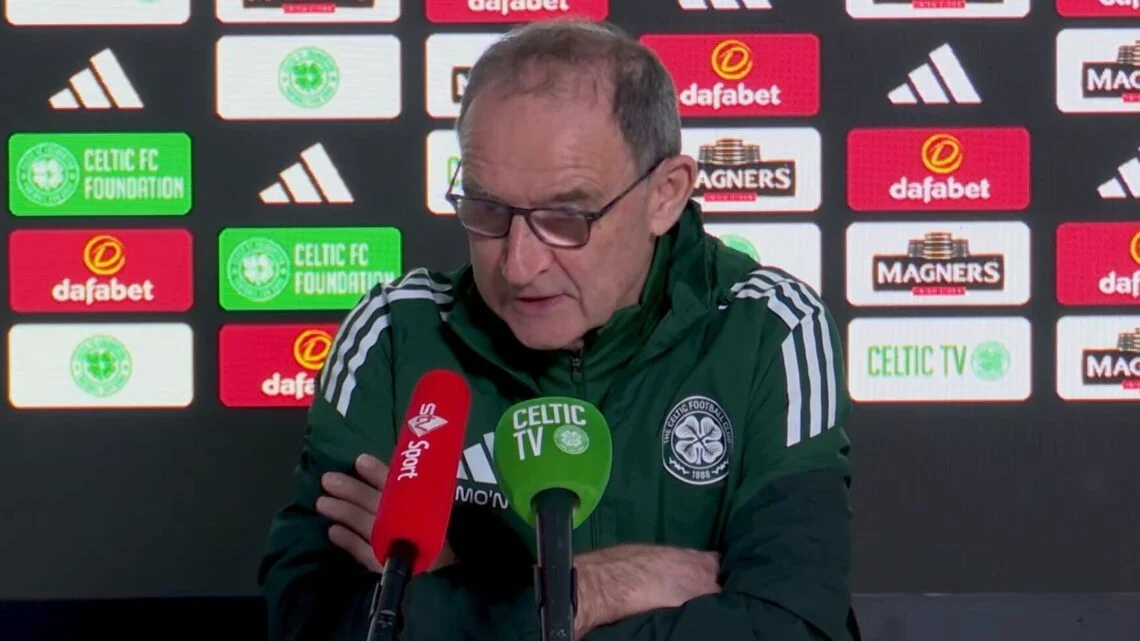

Celtic Icon or Hidden Obstacle? Why Keeping Martin O’Neill Could Derail the Club’s Reset
There’s no rewriting history when it comes to Martin O’Neill. His time at Celtic between 2000 and 2005 delivered silverware, unforgettable European nights, and a spirit that defined an era — highlighted by that unforgettable run to the 2003 UEFA Cup Final. His legacy is secure, and the admiration from supporters will never fade.
Even now, during the chaos of the 2025/26 season, the 74-year-old has stepped in when needed. Following the unexpected exit of Brendan Rodgers and the short-lived spell under Wilfried Nancy, O’Neill brought a degree of calm and kept the team competitive. That alone deserves respect.
But football doesn’t stand still — and neither can Celtic.
A Season That Exposed Cracks
This campaign has been more than just inconsistent — it’s been revealing. The breakdown of Rodgers’ second stint, Nancy’s failure to make an impact, and the need to call on O’Neill again all point to deeper issues.
- Recruitment that lacks direction
- Outdated football operations
- Over-reliance on past success rather than future planning
This isn’t something a temporary fix can solve. It calls for a complete overhaul — from how players are signed to how decisions are made behind the scenes.

Why an O’Neill Advisory Role Raises Concerns
There are now discussions involving Dermot Desmond and Michael Nicholson about keeping O’Neill involved long-term, possibly as an advisor.
On the surface, it sounds logical — who better than a club legend to guide the future?
But in reality, it could create more problems than solutions.
1. The optics problem
O’Neill’s close ties to Desmond risk reinforcing the idea of an inner circle controlling decisions. For fans already frustrated with the board, this could feel like more of the same — not a fresh start.
2. Risk of limiting new leadership
Any incoming manager, especially one with modern ideas, will want full control. The presence of a powerful figure behind the scenes — even unofficially — can create tension or hesitation. Top candidates don’t want oversight from the past; they want authority to shape the future.
3. Old influence vs modern evolution
The game has evolved rapidly. Data analytics, pressing systems, sports science, and global scouting networks now define success. While O’Neill’s leadership qualities remain strong, his continued influence could unintentionally slow the shift toward a more modern football structure.
4. The “soft reset” danger
Celtic don’t need a gentle transition — they need a decisive break. Keeping familiar figures involved risks turning a rebuild into a cosmetic change rather than a meaningful transformation.
Respecting the Past Without Holding Back the Future
None of this is about diminishing what O’Neill achieved. Quite the opposite.
Celtic can honour him properly:
- Club ambassador roles
- Ceremonial recognition or Hall of Fame status
- Celebrations of his historic achievements
But influence over football decisions should belong to those driving the next era — not those who defined the last one.
What a True Reset Looks Like
- A modern, forward-thinking manager with full autonomy
- A data-driven recruitment system with global reach
- Clear separation between boardroom influence and football operations
- New ideas and fresh personnel across all departments
This is how clubs grow — not by leaning on familiarity, but by embracing evolution.
The Supporters’ Dilemma
Fans will always love O’Neill. His return this season showed his commitment and connection to the club.
But sentiment can’t guide strategy.
The upcoming discussions with Desmond and Nicholson represent a defining moment. Choosing continuity may feel comfortable, but it risks prolonging the very issues that created the current instability — inconsistent performances, lack of European progress, and structural stagnation.
A Defining Decision Ahead
Celtic now stand at a crossroads.
They can either fully commit to change, empowering a new era with fresh leadership — or hold onto the past and risk repeating it.
Honour the legend, absolutely. But don’t let that legacy become a barrier to progress.
What Celtic need now isn’t a continuation of old chapters — it’s the courage to start an entirely new story.