
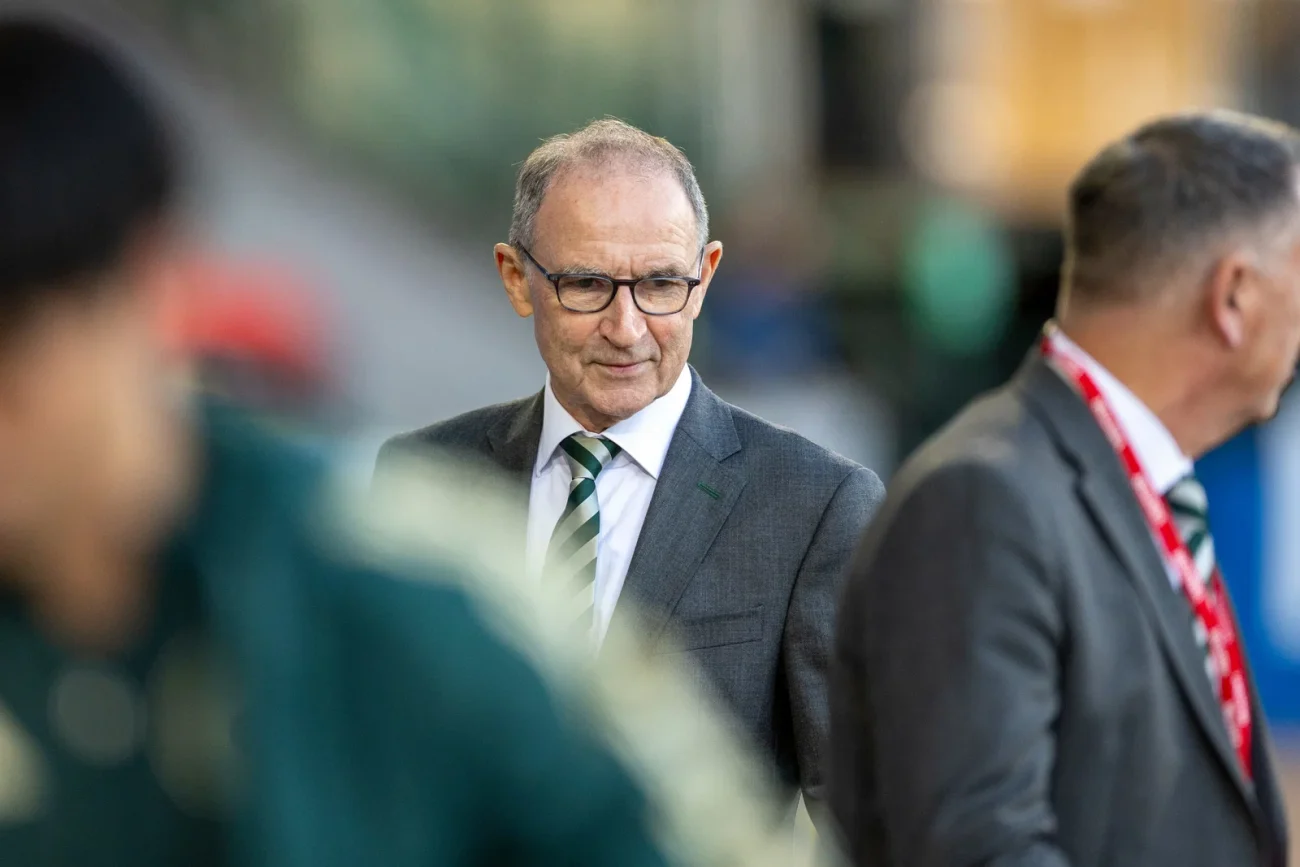
Martin O’Neill has offered a deeply personal reflection on the current state of Celtic Football Club.
The manager’s words carry extra weight because they come from a man who has lived through some of the club’s most glorious and most testing periods.
Speaking ahead of Sunday’s Scottish Premiership return against Motherwell, O’Neill made no attempt to disguise his sadness at the growing divide between sections of the support and the club’s hierarchy.
The atmosphere around Parkhead remains tense, and the Northern Irishman has now placed that tension firmly in the spotlight.
O’Neill Condemns Protest and Looks Back on Unity
O’Neill had already spoken out against the tennis-ball protest aimed at major shareholder Dermot Desmond during the Alfred Dunhill Links Championship at St Andrews. His verdict was blunt and unambiguous.
“This is not Celtic at all,” he stated. That single sentence captured the manager’s discomfort with the scenes that unfolded on the golf course and the wider unrest that has followed.
Yet his latest comments went further. Rather than simply criticising the protest, O’Neill chose to contrast the present mood with the moments of genuine togetherness he has experienced at the club.
Seville and the Power of Collective Spirit
The 74-year-old reached back more than two decades for one of those memories. “I can remember the days of having 80,000 people in Seville without an arrest. That’s Celtic to me,” he said.
The 2003 UEFA Cup final remains etched in the club’s modern history. Celtic lost 3-2 to Porto after extra time, but the enormous travelling support earned global admiration for its discipline and passion.
That night still represents, for many, the purest expression of what the club can be when everyone pulls in the same direction.
O’Neill also recalled the scenes at the end of last season. Celtic produced an extraordinary final-day comeback against Hearts at Celtic Park. Callum Osmand’s dramatic late winner sparked a pitch invasion that was joyful rather than chaotic.
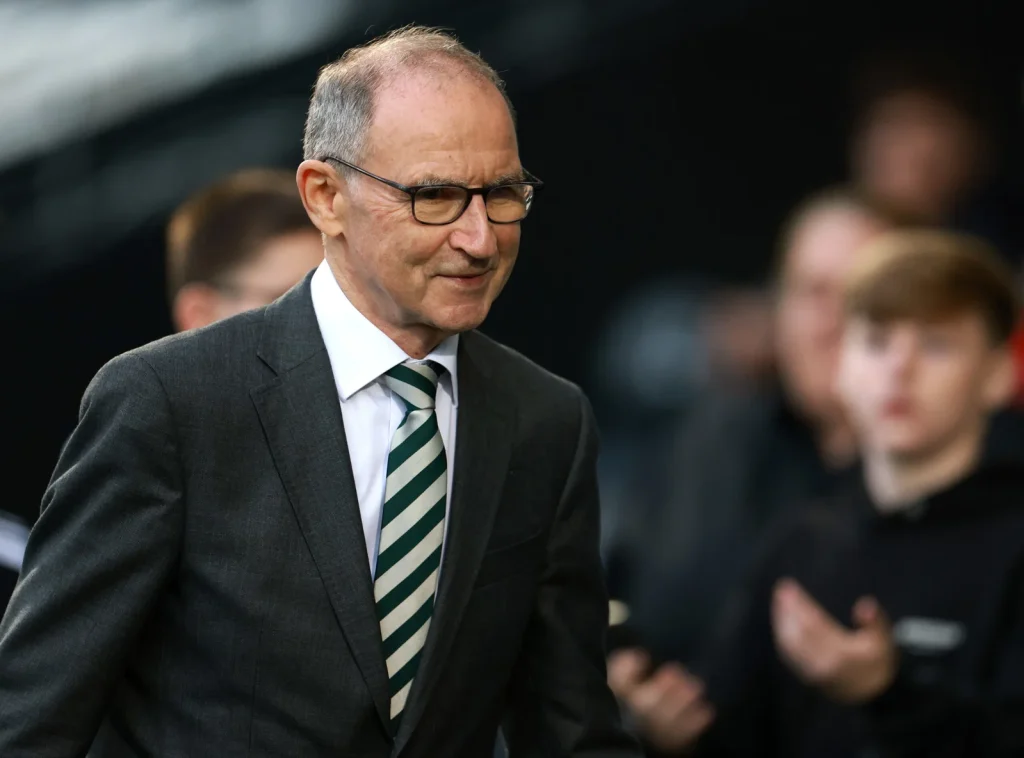
Last Season’s Double Still Fresh in the Mind
Seven days after that title-clinching victory, O’Neill’s side defeated Dunfermline in the Scottish Cup final to complete a domestic double. Those two results provided a temporary healing effect.
The anger directed at the board receded into the background while the players and supporters celebrated hard-earned success.
Those memories clearly remain vivid for the manager. “Those are phenomenal memories which I’ll never forget,” he said. “But at the end of it all, it is a sad situation.”
The final part of his answer landed with particular force. “I think if I have, as a football manager, to go through all of that again, I don’t know.”
Uncertainty Resolved, But Concerns Remain
Only recently O’Neill had ended speculation about his own future by confirming he wanted to stay and lead Celtic’s title defence. That decision was welcomed by most supporters who still regard him as a figure of genuine affection and respect.
Yet his latest admission reveals how heavily the current unrest is weighing on him. The manager inherited a divided club last season and somehow managed to channel the energy into on-pitch success. The dramatic title win pushed board-related anger to one side for a time, but it never disappeared.
That division has returned with renewed intensity. Celtic’s strong response to the St Andrews protest, the decision to end engagement with the Celtic Fans Collective, and the Green Brigade’s subsequent boycotts of cup and European matches have all deepened the sense of fracture.
Three Straight Defeats and the Immediate Challenge
O’Neill’s immediate priority is football. Celtic entered the international break on the back of three consecutive defeats. Those results left the squad and coaching staff frustrated and under scrutiny.
The side still sits near the top of the Premiership table and remains in the title conversation. However, the manner of the recent losses has raised questions about momentum and confidence. Motherwell at Fir Park on Sunday represents the first opportunity to restore both.
Tactically, O’Neill will look to tighten defensive organisation while restoring the attacking fluency that characterised much of last season’s successful run. The return of key players from international duty should help, yet the mental side of the game may prove just as important.
Fan Reactions Split Across the Support
Supporters have reacted to O’Neill’s comments with a mixture of sympathy and continued frustration. Many online voices praised the manager for speaking honestly about the sadness he feels. Others argued that the real problem lies higher up the hierarchy and that no manager should be expected to carry the burden of repairing damaged relationships.
Some fans have pointed out that O’Neill’s affection for the club is beyond question. His two spells in charge have delivered trophies and unforgettable nights. That history gives his words extra credibility when he describes the current climate as “sad.”
At the same time, sections of the support remain determined to maintain pressure on the board. Boycotts and organised protests continue to form part of the wider conversation around the club.
The Limits of a Manager’s Influence
Nobody can seriously doubt O’Neill’s love for Celtic. The memories he has created – from Seville to last season’s double – form part of the club’s modern identity. Yet it should not fall to the manager to fix the increasingly strained relationship between supporters and those who run the club.
Meaningful progress requires clear communication and decisive leadership from the highest levels at Parkhead. Until that happens, the sense of division is likely to persist regardless of results on the pitch.
O’Neill’s task remains straightforward in theory and difficult in practice. He must lift a team that has just suffered three straight losses and prepare them for a demanding run of fixtures. The title defence is still very much alive, but the margin for error has narrowed.
Looking Ahead to Motherwell and Beyond
Sunday’s trip to Fir Park will not decide the season, yet it carries symbolic importance. A positive result would help restore belief after the difficult spell that preceded the international break. It would also give O’Neill breathing space to continue shaping the squad according to his preferred style.
Celtic’s recent form has been mixed. Defensive lapses have proved costly, while attacking patterns have lacked the fluency seen during the best periods of last campaign. O’Neill is expected to demand greater intensity and better decision-making in both penalty boxes.
The broader context cannot be ignored. Every match now takes place against the backdrop of supporter unrest and board-related tension. That atmosphere filters into the stadium and, at times, into the dressing room.
A Manager Caught Between Two Worlds
O’Neill finds himself in an unusual position. He is one of the few figures capable of commanding respect from almost every section of the Celtic support. At the same time, he cannot control the decisions taken above him or the reactions those decisions provoke.
His willingness to speak openly about the sadness he feels is therefore significant. It humanises a situation that often descends into polarised online argument. It also underlines how far the current climate has drifted from the unity he remembers so fondly.
Whether those words prompt any shift in approach from the hierarchy remains to be seen. For now, the manager’s focus stays on the training ground and the next match.
The Weight of History and Expectation
Celtic supporters have high standards. They expect competitive performances in Europe and domestic dominance. When results dip and off-field issues intensify at the same time, the pressure multiplies quickly.
O’Neill has navigated similar storms before. His ability to keep players focused on the football while external noise grows louder was a key factor in last season’s success. Repeating that achievement will require the same clarity of purpose from the squad.
The coming weeks will test whether that focus can be maintained. Motherwell presents an immediate challenge, but longer-term questions about the club’s direction will continue to surface.
Final Thoughts on a Difficult Moment
Martin O’Neill’s latest comments will linger in the minds of Celtic supporters for some time. They capture both the affection he still holds for the club and the genuine unease he feels about its present state.
The memories of Seville and last season’s pitch invasion remain powerful. They serve as a reminder of what Celtic can look like when the various parts of the club operate in harmony. The contrast with today’s atmosphere is what makes the manager’s words so striking.
His admission that he does not know whether he could endure another period of such division is the most telling line of all. It reveals the personal cost of managing through unrest and the limits of what any coach can achieve when the wider environment remains fractured.
For the moment, O’Neill will concentrate on restoring on-pitch momentum. The rest of the story – the relationship between supporters and hierarchy – sits beyond his control. That reality may prove the most difficult part of the current chapter for everyone involved at Celtic Park.