
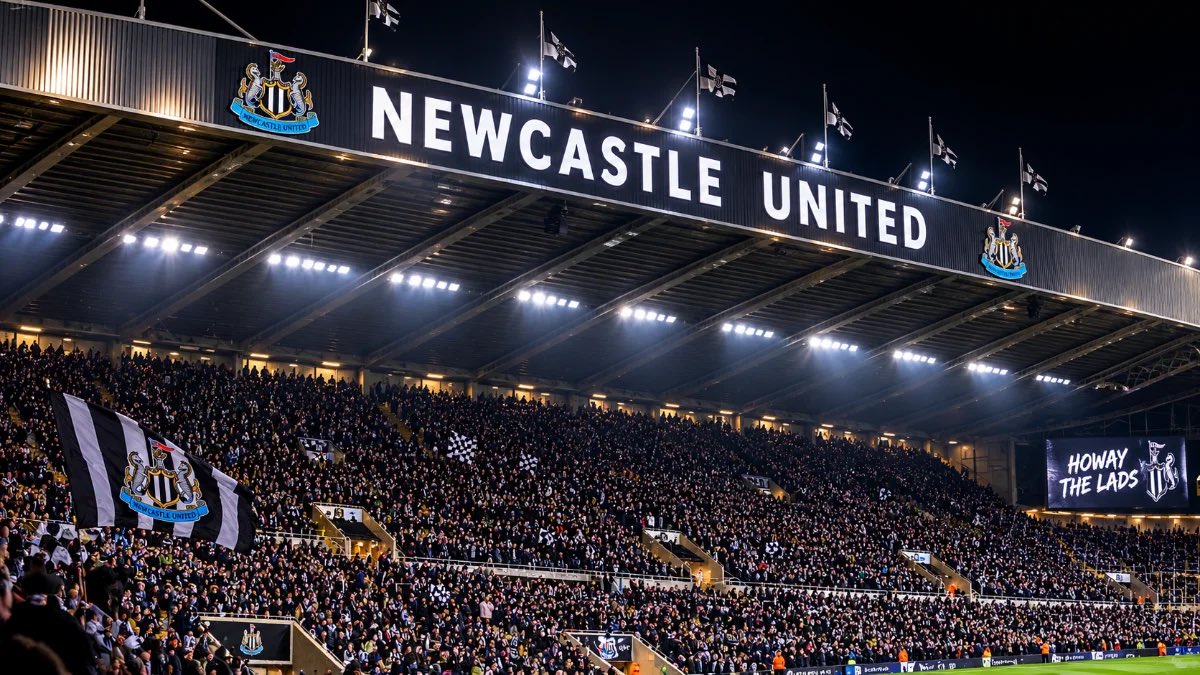
Exclusive developments emerging on Wednesday, 25 November 2026 have sent shockwaves through St James’ Park and the wider Premier League. Newcastle United’s majority owner, Saudi Arabia’s Public Investment Fund (PIF), is actively exploring the sale of up to 25% of the club through the issuance of new shares.
Wall Street giant JP Morgan has been appointed as advisors, and the process to identify minority investors is already underway.
The move, first reported in detail by David Ornstein and Chris Waugh of The Athletic, is designed to inject fresh capital directly into the club rather than putting money into PIF’s own coffers.
In practical terms, any new investor would buy newly created shares, diluting the existing ownership percentages while channeling funds straight into Newcastle United’s ambitious infrastructure plans.
What Exactly Is Happening?
PIF currently holds approximately 84–85% of Newcastle United. The remaining 16% is owned by the London-based Reuben family, with Jamie Reuben sitting on the board. Under the proposed structure, new shares would be issued equating to as much as a quarter of the enlarged club.
PIF’s controlling stake would shrink, but it would retain clear majority ownership. Crucially, no sale proceeds would flow to the Saudi sovereign wealth fund itself.
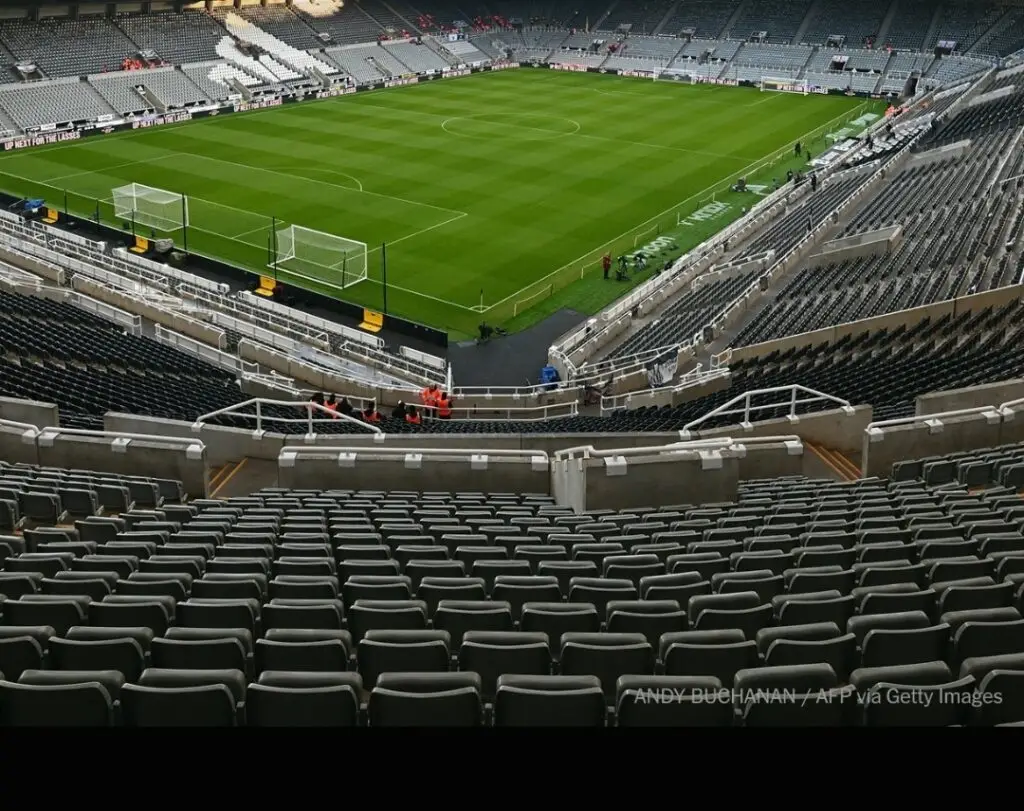
Sources close to the situation have stressed that the primary motivation is to fund major capital projects. The most significant of these is a long-discussed stadium solution. Options on the table include a comprehensive redevelopment of the existing St James’ Park (currently holding around 52,000) or the construction of an entirely new 65,000–70,000-seater stadium, potentially on the adjacent Leazes Park site. Cost estimates for a full new-build have been circulating in the region of £1.3 billion to £1.5 billion.
A new state-of-the-art training complex near Newcastle International Airport, already announced with a projected £190 million price tag and targeted completion around the 2029/30 season, is also part of the broader infrastructure push.
Chief executive David Hopkinson offered a telling insight earlier this week when he stated that the stadium project had moved from the “concept” stage into the “how we do this” phase, promising an update “soon.” The appointment of JP Morgan and the formal opening of a minority investment process appear to be the concrete next steps in that journey.
Why Now? Context Behind the Decision
Five years on from the landmark £305 million takeover from Mike Ashley in October 2021, Newcastle’s value has risen dramatically. Club sources and external analysts place the current valuation in the region of £2 billion, meaning a 25% stake could command around £500 million.
That figure sits comfortably within the range that serious institutional investors and private equity groups are prepared to commit for a Premier League club with Champions League pedigree and a passionate, growing global fanbase.
Yet the ownership landscape has shifted. PIF has scaled back several of its high-profile sports investments in 2026. Most notably, it withdrew support from LIV Golf, which subsequently filed for bankruptcy.
The fund has also sold a stake in Saudi Pro League side Al-Hilal, cancelled certain high-profile tennis and snooker events, and shown greater caution around additional direct funding. Against that backdrop, seeking external capital for Newcastle’s biggest-ever infrastructure commitment makes strategic sense from a sovereign wealth fund’s perspective.
On the pitch and in the accounts, Newcastle have enjoyed mixed fortunes. Two Champions League qualifications and a League Cup triumph demonstrated the early impact of Saudi investment. However, Profit and Sustainability Rules (PSR) and Financial Fair Play constraints have forced a more measured approach to the transfer market. High-profile summer departures, including Sandro Tonali, Anthony Gordon and Bruno Guimarães, reflected the need to balance the books while still competing at the highest level. A new or significantly expanded stadium is widely viewed inside the club as the key to unlocking the next level of commercial revenue and supporting sustained challenge for major trophies by the end of the decade.
Not a Full Sale – Sources Push Back Hard
Inevitably, the news has triggered speculation that PIF may be preparing an eventual full exit. Club and ownership sources have moved quickly to shut that narrative down. Multiple reports on Wednesday evening, including from Chronicle Live and the Press Association, quote sources insisting that “the club is not for sale” and that the current process is solely about financing infrastructure growth. One insider told local media: “Recent developments are off the back of the club looking to finance the new stadium.”
PIF governor and Newcastle chairman Yasir Al-Rumayyan attended his first match of the 2026/27 season on Saturday, watching the Magpies draw 2-2 with Arsenal. His presence was interpreted by many as a visible show of continued commitment. Sources close to the fund maintain that any serious full-sale offer would always be considered in the normal course of an investment fund’s duties, but that is emphatically not the purpose of the JP Morgan process now under way.
Who Might Buy In?
Several American investment funds are already understood to have registered interest. The Premier League has become an increasingly attractive destination for US capital, as demonstrated by Fenway Sports Group’s sale of a 38% stake in Liverpool last summer to a consortium that included Amazon founder Jeff Bezos. A minority stake in a well-run, ambitious Newcastle side with a clear pathway to significantly higher matchday and commercial income presents a similar opportunity.
JP Morgan’s brief is understood to include exploring a range of funding models. While the preferred route appears to be the issuance of new equity, the bank will also examine whether a heavier debt component could form part of the overall package. The goal is to avoid saddling the club with an unsustainable debt burden while still delivering the transformational facilities required for the next era.
What It Means for Supporters
For the Toon Army, the announcement lands as a mixture of excitement and caution. On one hand, progress toward a modern stadium and world-class training base has been a long-standing demand.
On the other, any dilution of the majority owner’s stake inevitably raises questions about long-term direction and financial firepower. The club’s hierarchy will need to communicate clearly and frequently in the coming weeks and months to keep supporters aligned with the vision.
Importantly, the structure protects the principle that new money strengthens the club rather than enriching the existing owners. That distinction matters. It positions the process as growth capital rather than an extraction event.
If executed well, the arrival of a sophisticated minority partner could also bring additional commercial expertise, international networks and governance experience that complement PIF’s resources and the Reuben family’s involvement.
The Road Ahead
As of late on 25 November 2026, no deal has been signed and no preferred investor has been publicly identified. The process is in its early formal stages. Talks that have been taking place quietly for several months have now crystallised into a structured mandate for one of the world’s leading investment banks.
Newcastle United sit at a pivotal moment. The Saudi takeover transformed the club’s trajectory and ambition. Five years later, the next chapter requires physical infrastructure to match the on-pitch aspirations. By opening the door to minority investment via new shares, PIF is signalling that it intends to remain the controlling force while recognising that the scale of the required investment benefits from external partners.
Whether the eventual outcome is a new stadium rising beside the Tyne, a radically upgraded St James’ Park, or a hybrid solution, the appointment of JP Morgan and the active search for a 25% partner mark the most concrete step yet toward delivering it. For a fanbase that has waited generations for sustained elite status, the developments of this Wednesday represent both a financial evolution and a statement of continued intent.
The coming weeks will reveal which investors step forward and how quickly the process advances. One thing is already clear: the future shape of Newcastle United is being actively redesigned, and the stakes – both literal and metaphorical – have never been higher.
Stay tuned for further updates as this story develops. All information accurate as of the evening of Wednesday, 25 November 2026.