


“Maintenance, Not Progress”: The Brutal Sentence Celtic’s Board Passed on Martin O’Neill
Celtic might as well forget about making any real progress this season — it was never on the table.
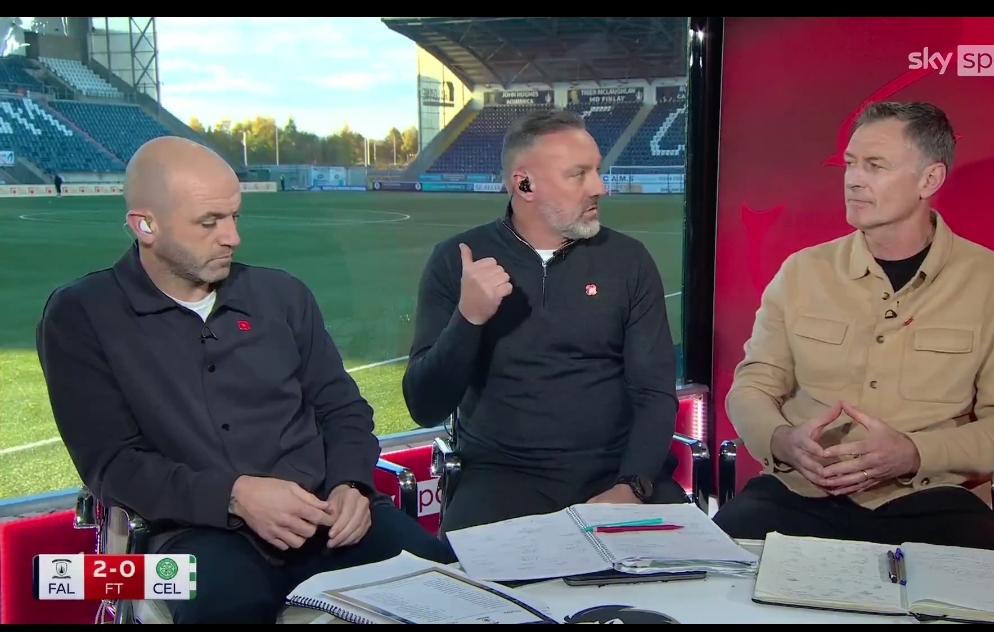
The Bhoys are back in crisis mode after a 2-0 defeat at Falkirk on Sunday that made it six defeats in their last ten matches across all competitions.
Ethan Ross scored inside three minutes after a calamitous error from Cameron Carter-Vickers, and Scott Tanser added a second before half-time.
Former Celtic goalkeeper Scott Bain produced a string of outstanding saves to deny Camilo Durán and others as Falkirk claimed their first victory over the Parkhead side in 19 years.

Celtic remain top of the Scottish Premiership with a four-point lead, but Rangers now hold a game in hand. In Europe the picture is far bleaker.
Three consecutive Europa League defeats have left Martin O’Neill’s side needing a near-miracle to reach the knockout stages, starting with Thursday’s clash against Beşiktaş.
The Premier Sports Cup campaign is already over after defeat to Rangers. The Scottish Cup has not yet begun. Domestically the league position looks healthy on paper, yet the mood around the club is one of mounting frustration and suspicion.
With every dropped point or flat performance the pundits circle, the social media pile-on intensifies, and the focus inevitably lands on the 74-year-old manager in the dugout. It is getting old. At this point we should all know the score.
Celtic Were Only Ever Planning for Maintenance
The Celtic board had already decided during the summer that the goal for 2026-27 would be maintenance, and they doubled down on that strategy the moment the team failed to qualify for the Champions League.
There were glaring needs going into the transfer window that were never properly addressed.
The squad that limped through the end of last season and then collapsed so spectacularly against LASK was never given the reinforcements required to compete at a higher level.
Once the Champions League dream died in Austria — a 4-0 aggregate lead turned into a 5-1 extra-time humiliation — it became clear that another Premiership title and a possible domestic double would be considered success enough.
If the LASK debacle did not trigger a serious recruitment drive, nothing was going to. The board knew the current group could not sustain a strong Europa League campaign. They accepted that reality rather than try to change it. Progress was therefore off the table from the outset.
That lack of ambition should be questioned repeatedly until it is addressed. Make no mistake: the decision to prioritise financial caution and domestic dominance over genuine squad evolution was made long before Martin O’Neill signed his one-year permanent deal in June.
O’Neill, of course, is not beyond criticism. Defensive organisation has been shaky. Players have been used out of position — Callum McGregor himself recently described some of the football as “a bit basketball” and noted that natural strikers have been asked to operate wide.
Chance conversion has been poor even on days when Celtic dominate possession, as they did at Falkirk where they recorded 70 per cent of the ball and 24 shots yet failed to score.
The veteran manager has admitted the recent run of three wins in ten games is unacceptable and has insisted he still has the stomach for the title fight.
“Remarkably, we’re still top of the league,” he said after the Falkirk defeat. “We came from a mile behind last year to win the league. So we came from a mile behind.”
That fighting talk is pure O’Neill, the same character who stabilised the club after Brendan Rodgers’ sudden departure in October 2025, briefly made way for Wilfried Nancy, then returned to deliver a dramatic league and cup double.
The problem is not primarily the manager’s age or his methods. The problem is the ceiling that was deliberately placed above him.
A Squad Built for the Domestic Grind, Not European Ambition
Look at the evidence of the past three months. Celtic can still grind out results against most Premiership sides when concentration holds.
They remain four points clear. Yet every time the level rises — whether against Rangers in the League Cup, against quality European opposition, or even against a well-organised and motivated Falkirk side on a high — the structural weaknesses are exposed.
The summer window brought limited arrivals and retained an ageing core. Key creative and defensive positions were not strengthened to the degree required for a club of Celtic’s stature and resources.
The result is a team that can still win the league through consistency and superior depth relative to most Scottish rivals, but which looks limited the moment the opposition sits deep, presses high, or simply matches Celtic’s intensity for 90 minutes.
This is the maintenance project in action. Another title would keep the domestic trophy cabinet ticking over and protect the commercial model. A deep European run was never seriously budgeted for after the Champions League exit.
The board calculated that the current squad, managed by a proven winner who knows the club inside out, would be sufficient for the primary objective. Anything beyond that was a bonus, not a requirement.
When that calculation meets the harsh reality of consecutive European defeats and the occasional domestic slip, the easiest target is the man in the technical area.
It is a familiar pattern at Parkhead. Ambition is declared in press releases and season-ticket campaigns, yet the practical decisions —recruitment budgets, wage structures, long-term planning often reveal a more conservative mindset. Supporters who travel in large numbers to Europe and fill Celtic Park week after week are entitled to ask why the club repeatedly settles for “good enough” rather than pushing for excellence. The answer lies in the boardroom more than the dugout.
O’Neill Is Managing the Hand He Was Dealt
There are clear issues with O’Neill and his coaching staff that have surfaced this season. The defensive lapses, the lack of a consistent cutting edge, the occasional tactical rigidity — these are legitimate points of debate.
Yet we need to stop pretending that the veteran boss is somehow standing in the way of progress that the club was never prepared to fund or prioritise.
With the standard of this squad and the strategic choices made last summer, genuine progress in the sense of competing consistently at a higher European level was never realistically on the table for O’Neill or any other manager.
The goal remains maintenance: another league title, which Celtic may well still achieve, and whatever domestic cups come their way. That is the brief O’Neill accepted when he signed his permanent contract.
He has delivered titles and cups before at this club. He did it again last season under far more chaotic circumstances. Expecting him to transform a carefully limited squad into European contenders overnight is to misunderstand the assignment he was given.
As Celtic prepare for Beşiktaş on Thursday and then return to the Premiership grind, the questions should be directed higher up the hierarchy.
Why was the squad not strengthened more aggressively after the LASK humiliation? Why does the club continue to operate with a safety-first philosophy that prioritises domestic dominance over the kind of investment that could elevate the European standing? Until those questions are answered honestly, every managerial post-mortem will miss the larger truth.
Martin O’Neill was sentenced to maintenance, not progress. The board handed down that sentence last summer.
The recent results — the Falkirk shock, the European struggles, the growing sense of drift — are simply the inevitable consequences of that decision playing out in public. The manager can be judged on whether he maximises the resources available. He cannot fairly be blamed for the limits that were placed on those resources before a ball was even kicked this season.
Celtic remain top of the table. The title is still theirs to lose. But anyone claiming the club is “going backwards” under O’Neill is ignoring the more uncomfortable reality: the club never intended to go forwards in the first place. Maintenance was the plan. Maintenance is what we are watching. And until the ambition matches the rhetoric, that is all we are ever going to get.