
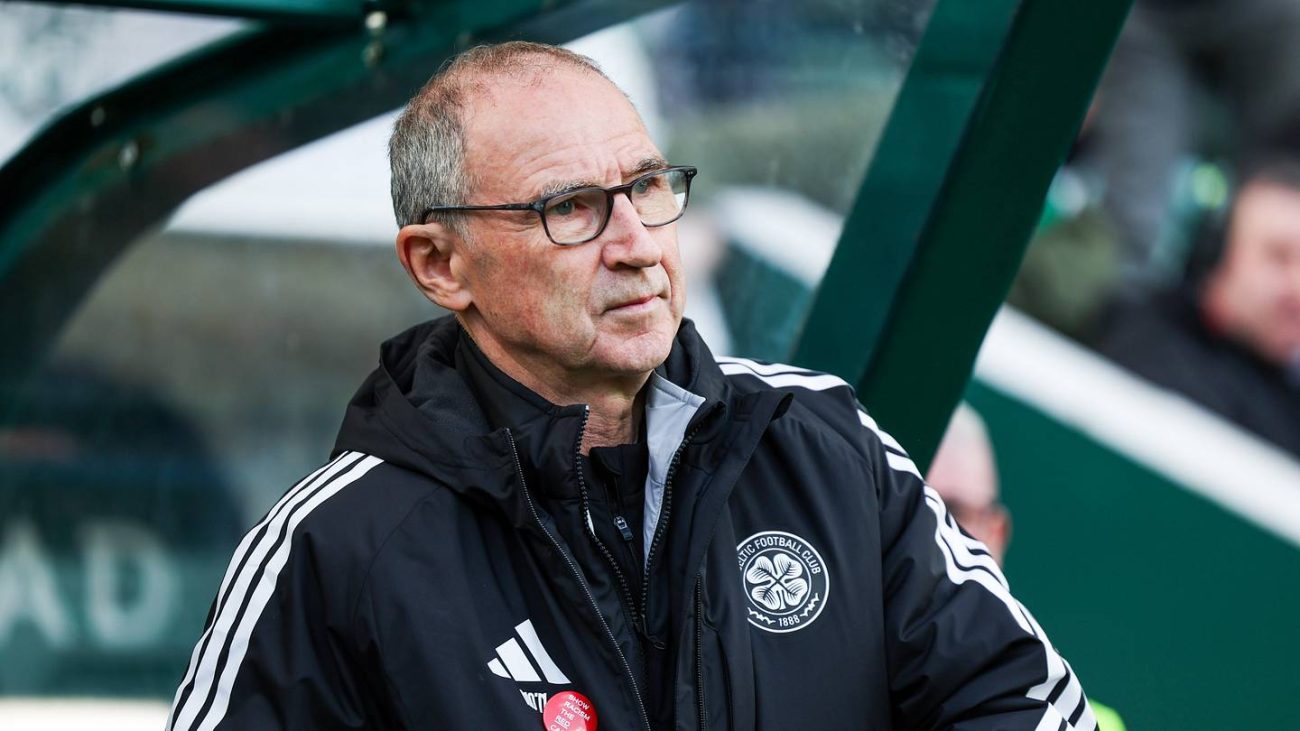
Martin O’Neill Confirms Devastating News For Celtic Fans Ahead Of Falkirk
Celtic supporters woke up this weekend with a familiar sense of unease. Just days after watching their side drop two points at home to Dundee United in a frustrating 2-2 draw,
manager Martin O’Neill stepped in front of the media and delivered news that will leave many fans feeling deflated heading into Sunday’s Scottish Premiership clash with Falkirk.

The Irishman confirmed that key defender will miss the trip to the Falkirk Stadium.
The American centre-back has returned to the United States to attend a celebration of his late father’s life following a recent bereavement.
Combined with the continued absence of right-back Alistair Johnston, who suffered a fresh hamstring setback on his return against Hibernian, Celtic will head to Falkirk without two important defensive options.
For a club chasing a domestic title and still trying to find consistency in Europe, every absence carries weight.
And with Falkirk arriving in strong form after three consecutive league victories, this is far from the ideal preparation Celtic fans were hoping for.

The Trusty Absence Hits Hard
Auston Trusty has been a reliable presence in Celtic’s backline whenever selected this season. His physicality, recovery pace, and ability to step into midfield when required have made him a valuable squad member under O’Neill.
Losing him for personal reasons is understandable and no one at the club would dream of questioning the priority of family, but the timing is cruel.
O’Neill addressed the situation directly in his Friday press conference. “I think Trusty is going to be back home to see… I think it’s a celebration of his father’s life,” the manager said. The comment was delivered with typical understatement, but the implication was clear:
Trusty will not be available for Sunday’s match and there is no firm timeline for his return beyond the family commitments.
This comes on the back of other defensive concerns. Alistair Johnston’s latest injury is particularly frustrating.
The Canadian international had only just returned from a previous hamstring issue when he lasted just over 20 minutes against Hibs before being forced off again. Scans confirmed a different issue from the original problem, and O’Neill has already indicated that Johnston is unlikely to feature before the international break later in November.
Add in the ongoing absence of Yang Hyun-jun and the fact that Dutch midfielder Joel van den Berg is still some way short of full match fitness, and Celtic’s options are thinner than supporters would like. For a squad that has already been stretched by a demanding schedule of Premiership and Europa League fixtures, every available body matters.
O’Neill’s Honest Assessment of the Attack
The defensive absences were not the only talking point from O’Neill’s media appearance. The Celtic manager was also asked about comments made by captain Callum McGregor regarding the team’s attacking structure.
McGregor had suggested that Celtic still lack a settled profile in the final third, with natural centre-forwards often being asked to operate in wider positions.
O’Neill did not push back. In fact, he offered full agreement.
“I totally agree that Callum Osmand is actually really a centre-forward. He probably would play off somebody strong alongside him. I’m not so sure he could lead the line on his own. And that Camilo Durán is really a centre-forward… so the players are getting to know each other. It’s as simple as that.”
The admission is significant. Celtic’s attack has shown flashes of real quality this season, particularly through Durán’s consistent goal threat,, but there has been a sense that the front line is still searching for its best combination. Deploying strikers in wide areas can create chaos for opposition defences in moments, but it can also leave the side without the control and structure required to dominate games over 90 minutes.
O’Neill’s willingness to publicly align himself with his captain’s analysis will be welcomed by many supporters who have been calling for greater clarity in the team’s attacking identity. Whether that clarity arrives in time for the Falkirk match remains to be seen.

Falkirk Arrive With Momentum
While Celtic deal with absences and structural questions, Falkirk head into the fixture in buoyant mood. John McGlynn’s side have won their last three Premiership matches, including a hard-fought 1-0 victory away to Aberdeen in midweek. That result lifted them into the top half of the table for the first time this season and underlined the progress they have made after a difficult start to the campaign.
Falkirk are no longer the side that simply sits deep and hopes to frustrate the bigger clubs. They have shown greater ambition and organisation, and the Falkirk Stadium has become a difficult venue for visiting teams. Celtic will need to be sharp from the first whistle if they are to avoid another afternoon of frustration.
The Bairns will, of course, have their own injury concerns. Several players remain unavailable or doubtful, including Leon McCann, Joe Gardner and Keelan Adams. But momentum can often outweigh individual absences, and Falkirk currently have that on their side.
What This Means for the Title Race
Celtic currently sit four points clear at the top of the Scottish Premiership. It is a solid position at this stage of the season, but as O’Neill himself noted, four points is “nothing at all” in the context of a long campaign. Rangers and the rest of the chasing pack will be watching closely, and any dropped points at Falkirk would immediately tighten the race.
O’Neill was keen to stress that he remains satisfied with the team’s domestic form overall. “I think we’ve done fine. We’re leading the league at this minute,” he said. The manager also pointed out that Celtic have recovered from larger deficits in previous seasons and that the current gap is far from decisive.
Still, the optics of travelling to an in-form side without two key defenders will concern supporters. Celtic have built their recent success on squad depth and the ability to rotate without a significant drop in quality. When that depth is tested, results can become more unpredictable.
The Bigger Picture Under O’Neill
This latest squad update arrives at a moment when the broader conversation around Celtic remains complex. O’Neill’s return to the club was met with widespread goodwill and a sense of stability after a turbulent period. Domestically, results have largely justified the optimism. Celtic remain top of the table and have shown resilience in matches where they have not been at their fluent best.
Europe, however, has been a different story. A difficult start to the Europa League campaign has left the side with little margin for error in the remaining fixtures. The contrast between solid domestic form and European struggles has fuelled debate among the support about the long-term direction of the squad and the balance of recruitment.
O’Neill has been characteristically pragmatic when addressing these issues. He has repeatedly emphasised that a number of players joined the club late in the transfer window and are still adapting to one another. Building cohesion takes time, particularly when the schedule offers little opportunity for extended training periods.
The manager’s latest comments about the attacking structure fit into this broader theme. Rather than denying the problems, O’Neill is acknowledging them openly and framing them as part of an ongoing process. Whether that honesty will buy him patience from a demanding support remains to be seen, but it is a clear departure from the more defensive public stances sometimes adopted by previous regimes.
What Celtic Need on Sunday
Beyond the absences, Sunday’s match represents an opportunity for Celtic to reassert control of the narrative. A professional away performance and three points would steady the ship after the midweek draw with Dundee United and send a message that the title race remains firmly in their hands.
Key to that will be the performance of the players who are available. Camilo Durán continues to look sharp in front of goal and will be central to Celtic’s attacking threat. Callum McGregor’s leadership in midfield remains indispensable. Liam Scales has stepped up at important moments, including the late equaliser against Dundee United, and will likely be asked to shoulder significant responsibility at the heart of the defence once again.
The wide areas may also take on added importance. With Johnston unavailable, the right-back position becomes a potential vulnerability that Falkirk will look to exploit. Whoever is selected there will need to balance defensive solidity with the ability to support attacks.
For Falkirk, the task is clearer. They will look to frustrate Celtic early, capitalise on any set-piece opportunities, and use their recent confidence to make the home crowd a factor. If they can stay in the contest into the final half-hour, the pressure on the visitors will only increase.
Fan Reaction and the Pressure of Expectation
Celtic fans are not known for their patience when results or performances fall short of expectations. The combination of defensive absences, lingering questions about the attack, and a difficult away fixture is already generating discussion across social media and fan forums.
Some supporters will view Trusty’s absence as an unavoidable personal matter and focus instead on the opportunity for other players to step up. Others will see the broader injury list as evidence that the squad still lacks the depth required to compete on multiple fronts. Both perspectives contain elements of truth.
What unites most fans is the desire for a response. After dropping points at home in midweek, anything less than a determined display at Falkirk will intensify scrutiny on the team and the manager. O’Neill has navigated pressure before during his previous spell at the club, but the modern Celtic support operates in a different media environment where every press conference comment and every selection decision is dissected in real time.
Looking Beyond Sunday
Regardless of the result against Falkirk, Celtic’s season will not be defined by a single away match in early November. The title race remains in its early stages, and the Europa League campaign still offers opportunities for recovery. Yet matches like this often serve as barometers for the health of a squad.
If Celtic can overcome the absences and deliver a controlled performance, confidence will rise heading into a busy period of fixtures. If they struggle, the questions about squad depth, attacking structure, and the pace of progress under O’Neill will grow louder.
The manager’s own words this week suggest he understands the challenge. By acknowledging both the absences and the tactical issues raised by his captain, O’Neill has chosen transparency over spin. That approach may not always produce comfortable headlines, but it at least gives supporters a clear sense of where the team currently stands.
The Stakes Are Clear
Sunday’s match at the Falkirk Stadium is more than just another Premiership fixture. It is a test of Celtic’s ability to manage adversity, maintain their position at the top of the table, and demonstrate that the progress made so far this season is sustainable.
Martin O’Neill has confirmed the bad news. Auston Trusty will not be there. Alistair Johnston remains sidelined. The attack is still searching for its best balance. Now it is over to the players who are available to show that those setbacks need not define the afternoon.
Celtic fans will be watching closely. They always do. And after a week of difficult updates, they will be hoping for a response that restores some of the optimism that has carried the team to the top of the Scottish Premiership.
The Bairns will provide a stern examination. Whether Celtic pass it will say a great deal about where this side currently stands.