
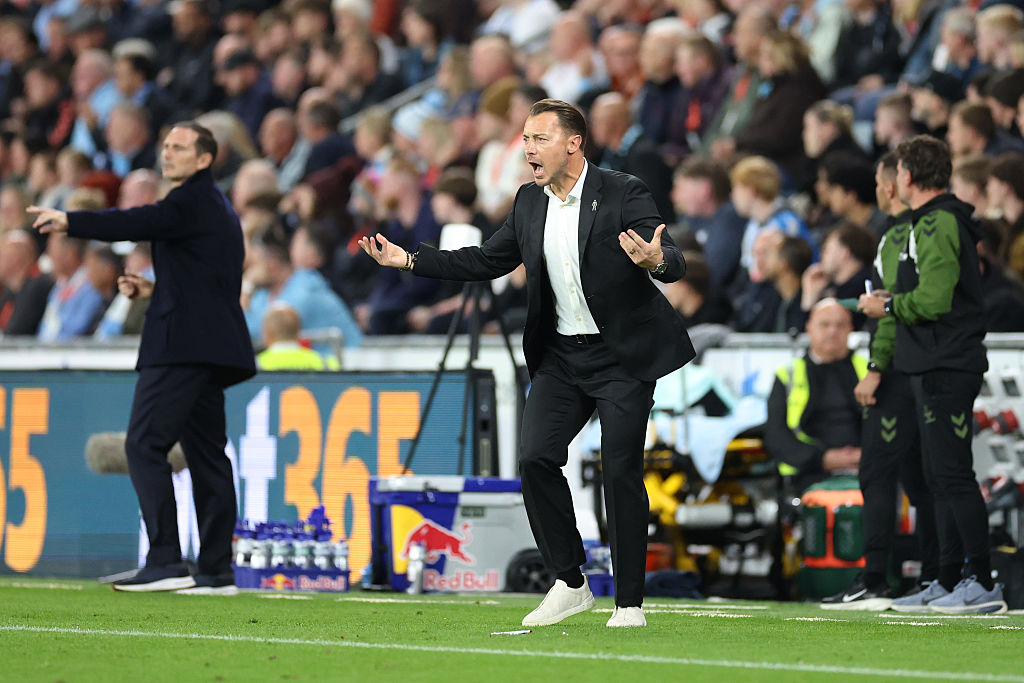
Newcastle United’s hierarchy are standing firmly behind head coach Matthias Jaissle even as results continue to frustrate supporters on Tyneside.
The Magpies currently sit in mid-table after a difficult run of Premier League fixtures that has raised the first serious questions about the German’s future.
Just one win in their last five league matches tells its own story. That solitary victory came against newly promoted Hull City, a result that briefly eased the pressure before Saturday’s reverse against Aston Villa.
The Villa defeat marked Newcastle’s third loss in four Premier League outings and left many fans wondering how long the board’s patience would last.
Talk of an early change has begun to circulate, yet the club’s decision-makers appear determined to give Jaissle the time he needs.

Board Remain Committed Despite Mid-Table Struggle
According to the Daily Mail, there is no appetite inside the club to cut losses with the former Al-Ahli boss. The hierarchy is instead directing its energy into supporting Jaissle through what is acknowledged as a poor period of form.
Senior figures at St James’ Park view the current difficulties as part of a wider transition rather than evidence that the appointment itself was a mistake. The Saudi-backed ownership group continues to back the 38-year-old to turn the situation around.
That public and private support is significant. Newcastle have invested heavily in the project Jaissle is trying to build, and an early sacking would represent a costly and embarrassing U-turn.
The Bottom-Three Threshold
The same report does outline the circumstances under which the board’s stance could shift. Should Newcastle drop into the bottom three and remain there for a significant period, the conversation around Jaissle’s position would intensify rapidly.
For now, though, that scenario remains hypothetical. The Magpies are still several points clear of the relegation zone, and the PIF decision-makers are choosing patience over panic.
This measured approach reflects the club’s longer-term planning. Jaissle was identified as the preferred candidate to succeed Eddie Howe after the Englishman’s abrupt departure in the summer, and the hierarchy is reluctant to abandon that plan so soon.
Kieran McKenna’s Name Continues to Surface
Even as the board reaffirms its support for Jaissle, the name of Kieran McKenna has not gone away. The Northern Irishman was explored as a potential option when Newcastle were searching for a replacement for Howe earlier this year.
McKenna, like Howe, left Ipswich Town during the off-season and was understood to be highly regarded by figures at St James’ Park. His ability to organise a competitive side on limited resources made him an attractive candidate at the time.
Should the club eventually decide that a change is necessary, McKenna would almost certainly re-enter the conversation. For the moment, however, that remains a contingency rather than an active plan.
Why McKenna Appeals to the Hierarchy
Those who have followed McKenna’s career closely point to his clear tactical identity and his success in developing young players. These qualities align with the direction Newcastle have been trying to take under their current ownership model.
Yet the fact that the board is still publicly and privately backing Jaissle suggests they are not yet ready to explore alternatives. The German retains the confidence of the key decision-makers.
That confidence is being tested by results, but it has not yet been broken. The club’s hierarchy appears determined to give their chosen coach every opportunity to succeed.
Jaissle’s Assessment After the Villa Defeat
Following Saturday’s 1-0 home loss to Aston Villa, Jaissle faced the media and refused to hide from the team’s shortcomings. The German maintained that his side had dominated large parts of the contest and created enough opportunities to win the game.
“It was, in fact, a game where we were dominating, overseeing a team giving a response,” he said. “We made many situations where you saw we were about to win that game until we conceded the goal.”
Jaissle acknowledged that his players had looked nervous in the opening period. “We need to be honest – we were shaking a bit until half-time, but we showed again a good response.”
Second-Half Intensity Not Matched by Quality
The Newcastle head coach was particularly pleased with the intensity his team showed after the interval. “Second 45 minutes, really aggressive from our lads. We won the duels,” he noted.
The problem, in his view, lay in the final third. “Unfortunately we were not smart enough in the final decision-making in the opposition box, so that is something we need to work on.”
Those comments capture both the promise and the frustration of Newcastle’s current performances. The structure and effort are often visible, yet the cutting edge required to convert control into points has been missing too often.
Recent Form in Context
Newcastle’s league position reflects a side that has been competitive without being consistent. Wins have been hard to come by, and the three defeats in four matches have left supporters increasingly anxious.
The victory over Hull City remains the only bright spot in the recent sequence. That result demonstrated what Jaissle’s side can produce when everything clicks, but it has not been repeated often enough.
Away from home the Magpies have struggled to impose themselves, while at St James’ Park they have sometimes looked short of ideas once the opposition sits deep. These patterns are not new, but they have become more pronounced as the season has progressed.
Tactical Questions Mounting
Observers have noted that Newcastle’s pressing is energetic yet occasionally disorganised. The high defensive line that Jaissle favours has been exposed on the counter-attack more than once in recent weeks.
In possession the Magpies often progress the ball effectively into the final third, only for the final pass or shot to let them down. This lack of clinical edge is the issue Jaissle himself identified after the Villa game.
Addressing that inefficiency has become the immediate priority on the training ground. Without improvement in the penalty area, the current run of results is unlikely to change quickly.
Fan Reaction on Tyneside
Supporters have responded to the recent form with a mixture of frustration and reluctant understanding. Many recognise that Jaissle inherited a squad in transition after significant summer departures and an unexpected managerial change.
Nevertheless, patience is finite. Social media and local radio phone-ins have begun to feature more critical voices, with some calling for the board to act before the situation deteriorates further.
Other fans urge caution, pointing to the long-term nature of the project and the fact that the manager has been in the job for only a matter of months. The divide in opinion is clear and growing.
The Atmosphere at St James’ Park
Saturday’s defeat to Villa was met with a subdued atmosphere rather than outright hostility. Boos were limited, but the silence that followed the final whistle spoke volumes about the mood among the home support.
Players have spoken privately of the need to give the fans something to cheer about again. Restoring confidence both on the pitch and in the stands is now a dual priority for Jaissle and his coaching staff.
How the team responds in the coming fixtures will go a long way towards determining whether the current support from above remains unconditional.
Looking Ahead: Critical Weeks for Jaissle
The next month of Premier League action carries extra significance. Newcastle face a run of matches that will either steady the ship or intensify the scrutiny on the head coach.
Positive results would reinforce the board’s current stance and quieten the external noise. Another sequence of disappointing performances would inevitably bring the bottom-three scenario discussed by the Daily Mail into sharper focus.
Jaissle has shown no sign of feeling the pressure in public. His post-match comments after the Villa game were measured, analytical and focused on improvement rather than excuses.
What Success Looks Like in the Short Term
In the immediate future, three points and a clean sheet would do more for morale than any statement of support from the hierarchy. Supporters want to see evidence that the tactical ideas are beginning to translate into consistent results.
Jaissle has repeatedly stressed the importance of decision-making in the final third. Improving that aspect of the team’s play is the clearest short-term target he has set.
If those improvements arrive, the current mid-table position could yet prove to be a temporary blip rather than the start of a deeper crisis.
The Bigger Picture for Newcastle
Beyond the immediate results, the club’s ownership continues to view Jaissle as the right man to shape the next phase of the project. The German’s track record of developing structured, high-intensity teams was a major factor in his appointment.
That long-term vision remains intact even as short-term results have dipped. The hierarchy’s willingness to absorb criticism rather than react impulsively is a notable feature of the current approach.
Whether that approach survives a further dip in form is the question that will dominate the coming weeks. For now, the message from the board is clear: Matthias Jaissle retains their full backing.
The German will hope that message is soon reinforced by performances and results that give the supporters reason to believe again. Until then, the tension between patience and expectation will continue to define the mood around St James’ Park.