

Newcastle United’s Calculated Summer Strategy: Why the Magpies Are Holding Fire Until Mid-August Amid UEFA Rules and Squad Rebuild
Newcastle United are approaching the remainder of the summer transfer window with a mixture of caution and ambition.
After a busy start to the window that has already reshaped parts of the squad, the club is carefully navigating complex financial and regulatory hurdles. Central to their current planning is a deliberate pause before launching a significant move in the midfield market, timed to avoid potential complications under UEFA’s latest transfer regulations.
This approach reflects the wider balancing act the Magpies face as they look to strengthen key areas while protecting their financial position and squad harmony.
The decision to wait until August 16 stems directly from UEFA’s 45-day rule, which treats certain transfers between the same clubs within a short timeframe as linked player exchanges. Sandro Tonali completed his move from St James’ Park to Tottenham Hotspur on July 2. By holding off any formal approach for a potential replacement until mid-August, Newcastle ensure the deals remain separate for accounting purposes. Former Manchester City financial adviser Stefan Borson has explained the logic clearly: the club needs those 45 days to pass so any future transaction is not viewed as a player exchange involving Tonali. This careful timing could prove decisive in how the numbers are treated under both Premier League and UEFA financial frameworks.
Squad Changes and the Need for Reinforcement
The summer has already brought notable arrivals and departures. Newcastle have secured goalkeeper Ewen Jaouen from Stade Reims for around £18 million, Ivorian winger Bazoumana Touré from Hoffenheim in a deal worth approximately £40 million, Dutch midfielder Sean Steur from Ajax for roughly £20.5 million, and Aladji Bamba from Monaco for about £30 million. These additions bring youth, athleticism and long-term potential. Yet the outgoings have been substantial. Anthony Gordon’s departure and Tonali’s high-profile exit have removed established quality, while Bruno Guimarães continues to attract strong interest from Arsenal and remains a likely summer departure.
Against this backdrop, Newcastle’s midfield requires further investment. The club has also made clear that its pursuit of two new wingers is entirely separate from any midfield target. The wide areas remain a priority regardless of other business, underlining a dual-track recruitment strategy designed to address multiple squad weaknesses simultaneously.
The Tottenham Target and a Rising Valuation Battle
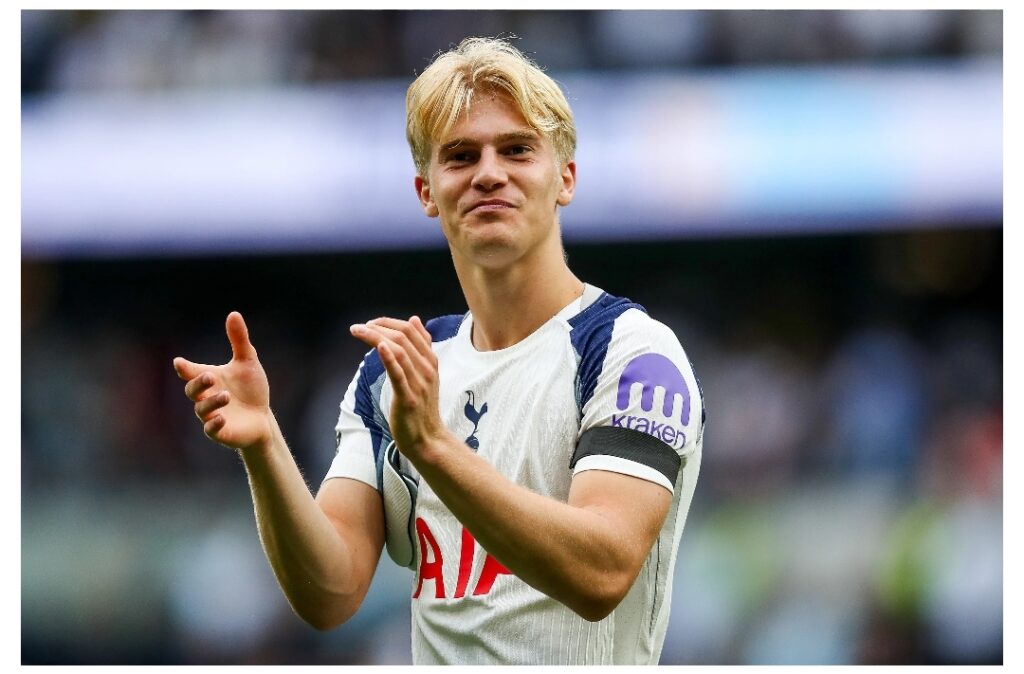
The player at the centre of the delayed interest is Tottenham midfielder Lucas Bergvall. The Sweden international has dropped down the pecking order at Spurs following the arrivals of Tonali and Mateus Fernandes. Reports indicate he is open to a move this summer in search of regular first-team football. Several Premier League clubs, including Nottingham Forest and Brighton, have shown interest, while Gianluca Di Marzio revealed that Tottenham have already turned down a €50 million offer from clubs in England. Spurs are understood to be holding out for closer to £60 million or more.
Borson has questioned the valuation itself. “I just don’t see any real way in which you can position his valuation between £50m and £60m. Who says he’s £50m? Who says he’s £60m? It is very finger in the air. The player hasn’t really done much. He looks like a decent prospect, but he wants to go,” he told Football Insider. That uncertainty works both ways. Tottenham’s hard stance means any deal will be expensive, yet Bergvall’s desire to leave and the number of interested parties create a competitive market that Newcastle must navigate carefully.
Managerial Uncertainty Adds Another Layer
Complicating the picture further are widespread reports that Eddie Howe could leave Newcastle this summer, with Al-Hilal head coach Matthias Jaissle heavily linked as a potential replacement. Any change in the dugout would inevitably influence recruitment priorities and the type of midfielder the club targets. Until clarity emerges on the managerial situation, the club appears content to wait rather than force through deals that might not align with a new head coach’s vision.
Why the Delay Makes Sense – and What Comes Next
Waiting until August 16 is not merely bureaucratic. It protects Newcastle from potential UEFA complications that could affect how the Tonali sale is recorded and how much financial headroom remains for further spending. In an era of strict Profit and Sustainability Rules and UEFA’s own regulations, such precision matters. A deal structured cleanly is far more valuable than one that creates accounting headaches later in the cycle.
Bergvall, still only 20, possesses the technical quality, physicality and progressive passing that would fit the modern Premier League midfield profile. His limited minutes under Roberto De Zerbi last season have accelerated his wish for a fresh start, yet Spurs’ reluctance to sell cheaply reflects both his remaining contract length and the club’s desire to recoup a significant profit on a player signed for a relatively modest fee in 2024. Newcastle’s challenge will be to decide whether the fee, once negotiations open, represents genuine value or an inflated market price driven by scarcity of similar profiles.
In the meantime, the Magpies continue to prioritise other areas. The pursuit of two wingers remains independent of the Bergvall situation, signalling that the recruitment team is working on multiple fronts. Supporters will hope that the combination of careful timing, competitive offers and clarity on the managerial front allows the club to emerge from the window stronger rather than simply busier.
The coming fortnight will be revealing. If Newcastle do table a formal bid after August 16, it will mark one of the more strategically planned approaches of the summer – a club refusing to rush, protecting its financial position, and still aiming high for a player many believe has the potential to become a long-term cornerstone. Whether Tottenham ultimately relent, and whether rival clubs force the issue before then, remains to be seen. What is already clear is that Newcastle are treating this particular target with the patience and precision the modern transfer market increasingly demands.