
Celtic’s Identity Crisis: Top of the Table but Searching for a Clear Direction – 2 November 2026
Celtic find themselves in a familiar yet uncomfortable position: top of the Scottish Premiership on paper, yet under intensifying scrutiny for a lack of clear direction and identity on the pitch.
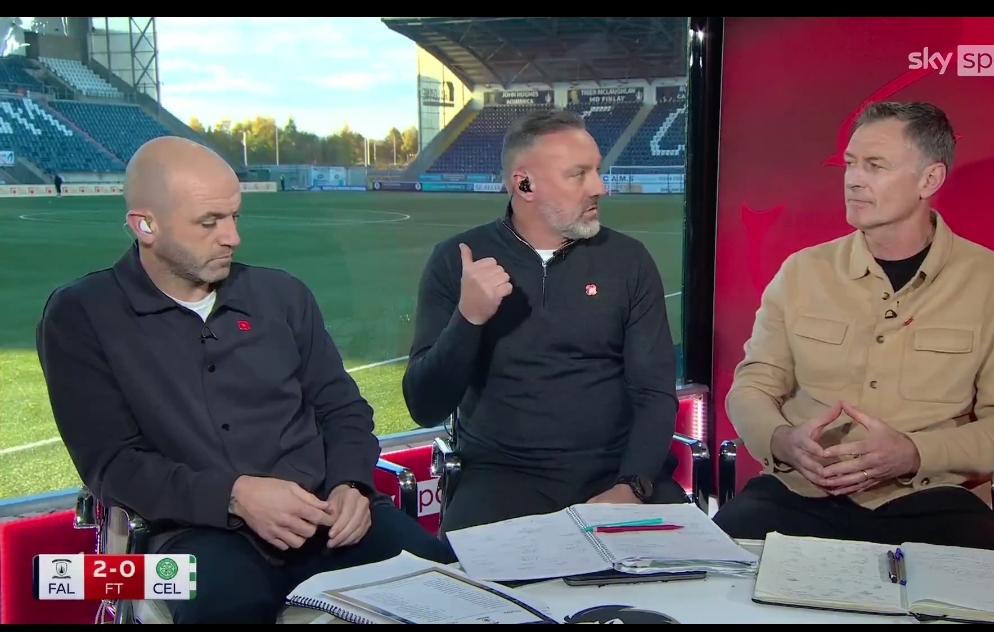
Yesterday’s 2-0 defeat at Falkirk crystallised the growing unease.
Goals from Ethan Ross in the third minute and Scott Tanser later in the first half handed the Bairns a first win over
Celtic since 2007 and a fourth consecutive victory that lifted them to fourth in the table.
Celtic dominated possession (around 70 per cent), registered 24 shots with nine on target and created an xG north of 2.7, yet former Hoops goalkeeper Scott Bain produced a string of outstanding saves.

The result left Martin O’Neill’s side with six defeats in their last ten matches across all competitions and only three wins in that period.
They remain four points clear of Rangers at the summit with 28 points from 12 games, but the Ibrox side have a game in hand and the gap feels more precarious than the numbers suggest.
It was against this backdrop that Sky Sports Scotland posted a clip of their studio discussion featuring Kris Boyd, James McFadden and Chris Sutton. Boyd’s comments cut through:
“We can say all we want about Wilfried Nancy, but you could see what he was trying to do.
I don’t see what this Celtic team is trying to do.
” The former Rangers striker, often a critical voice of the Parkhead club, was not alone. Sutton described a “team in regression” and questioned the manager’s responsibility, while the panel more broadly asked what actual plan the club is pursuing.
The video quickly circulated among supporters still processing another soft defensive display and another failure to convert territorial dominance into goals.

The Nancy Contrast
Wilfried Nancy’s brief tenure provides the uncomfortable contrast.
Appointed in early December 2025 on a two-and-a-half-year deal after Brendan Rodgers’ resignation, the Frenchman arrived from Columbus Crew with a reputation for proactive, possession-oriented, attacking football.
He lasted just 33 days and eight matches, recording two wins and six defeats, including a League Cup final loss to St Mirren and a heavy Old Firm reverse.
He was sacked in early January 2026, becoming Celtic’s shortest-serving permanent manager.
Martin O’Neill, who had stabilised the side as interim before Nancy’s arrival, returned and guided the club to a dramatic league title and Scottish Cup success last season.
The narrative of redemption was powerful. Yet nearly a year on from that second permanent appointment, the same questions of identity have resurfaced.
Boyd’s observation is revealing precisely because Nancy’s experiment, however brief and ultimately unsuccessful, had a discernible idea.
Supporters and pundits could identify the intended style even when results were poor.
Under the current regime the football often looks functional rather than purposeful: periods of control that lack incision, recurring individual defensive errors, and a sense that the collective is not greater than the sum of its parts.
Clean sheets have been scarce. New or returning players have at times appeared to struggle with the intensity and expectation that comes with the green-and-white shirt.
O’Neill’s Response and the Wider Issues
O’Neill himself acknowledged after the Falkirk match that the two goals conceded were “very poor from our viewpoint” and that the side must tighten up and start keeping clean sheets.
He also stressed the volume of chances created and Bain’s excellence, noting that “on another day we could have scored six or seven.”
His default position remains pragmatic: Celtic are still top, they recovered from a far worse position last season, and the noise must be ignored.
That pragmatism has limits. Celtic’s European campaign has been disappointing.
An early exit from Champions League qualifying was followed by a winless start in the Europa League.
Domestic results have begun to mirror the fragility seen on the continent. The hierarchy’s decision-making continues to attract criticism.
The Nancy appointment itself is still cited as evidence of a scattergun approach to recruitment and managerial selection.
Paul Tisdale’s departure as head of football operations around the same time as Nancy’s sacking only added to the sense of institutional uncertainty.
Boyd’s broader point on the Sky Sports panel—that a top club should already have a clear succession plan and a coherent long-term footballing identity—resonates with a section of the support that feels the club has drifted since the peak years of the Ange Postecoglou and early Rodgers eras.
There are mitigating factors. The fixture list remains congested. Squad rotation is necessary. Several players are still adapting.
The table still shows Celtic as the best team in Scotland by a clear margin in goals scored and goal difference.
O’Neill’s experience and emotional connection to the club cannot be dismissed lightly; he has repeatedly demonstrated an ability to extract results when the situation appears bleak.
Yet the cumulative weight of six losses in ten games, the manner of the Falkirk defeat, and the visible frustration among travelling supporters who began heading for the exits when a third Falkirk goal looked imminent, create a different atmosphere from the euphoria of last May.
What Comes Next
The coming days will be instructive. A Europa League fixture against Beşiktaş on Thursday offers an immediate opportunity to arrest the slide and collect a first point in the competition.
A home league match against Kilmarnock follows before the international break.
Results in those games will determine whether the current scrutiny intensifies into genuine pressure on the manager or whether O’Neill’s side can reassert control and quieten the conversation about identity and planning.
For now, the Sky Sports discussion has crystallised a genuine debate. Celtic remain the dominant force in Scottish football by most conventional metrics.
They also look, to an increasing number of observers, like a team without a coherent or recognisable idea of how they want to play. Boyd’s comparison with Nancy may rankle some, given how poorly that experiment ended, but it lands because it highlights the absence of clarity rather than nostalgia for a failed appointment.
On 2 November 2026 the question facing Celtic is no longer simply whether they will win the league again.
It is whether the club, from boardroom to dressing room, knows what kind of team it is trying to become—and whether that vision can be translated into consistent, recognisable performances before the current drift becomes something more damaging.
The table still offers protection. The performances and the punditry suggest that protection is not infinite.