
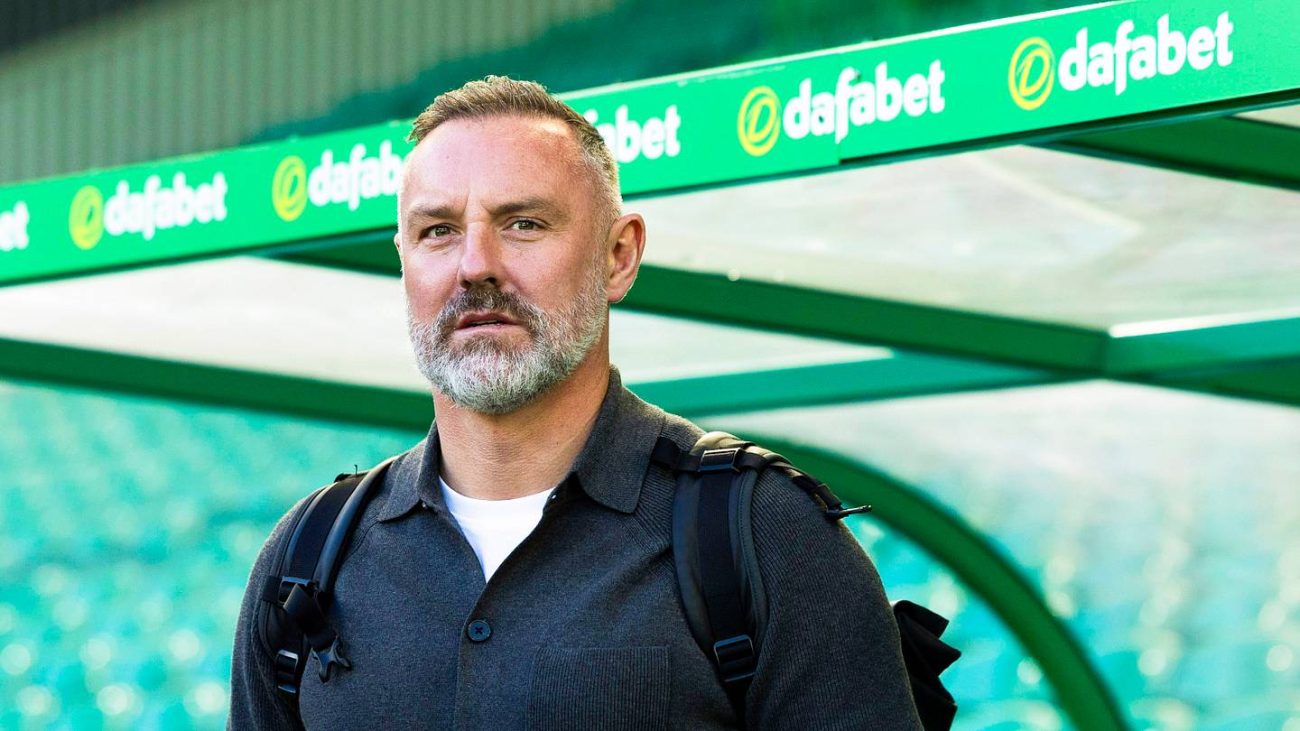

Former Rangers striker turned television pundit Kris Boyd has delivered a stark assessment of the current Celtic side, claiming the team operates under a constant cloud of potential crisis.
According to Boyd, this Celtic squad never feels far from the next bout of panic, no matter what the league table might suggest on any given weekend.
The comments come as the Bhoys head into the international break on the back of two important victories.
First came a hard-fought win over Besiktas that kept their Europa League campaign alive.
That was followed by a narrow success against Kilmarnock that maintained their four-point lead at the top of the Scottish Premiership.
Rangers, of course, still have a game in hand, a fact that never escapes notice among the Celtic support.
On paper those results look solid enough. In reality they feel more like temporary relief than genuine momentum.
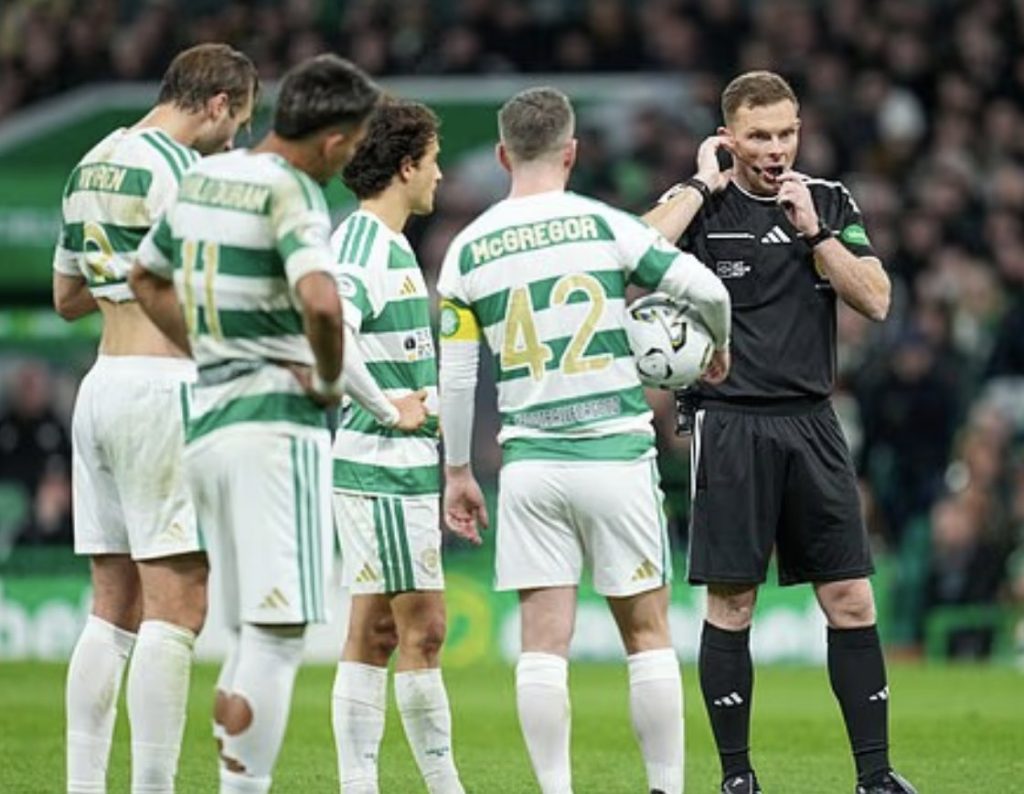
The previous international break arrived after three straight defeats that left even the experienced Martin O’Neill publicly questioning aspects of his own future. That context matters. It explains why a couple of wins have not fully settled the nerves around Paradise.
Boyd captured the mood perfectly when speaking to the Daily Record. “Celtic have been a team where you’ve felt a crisis is always around the corner,” he said.
“You can’t knock the fact they are four points clear, though, yes, Rangers have a game in hand. It was like the crisis button was pressed after Falkirk.”
He continued: “But they found a way to win against Besiktas and again at the weekend. I don’t think it was a great performance but it was three points and that’s all that mattered for Celtic right now.
Martin will be delighted to get that one over the line and keep the wolves away from the door for now.”
Those remarks cut to the heart of the matter. Celtic are not collapsing. They sit top of the table. Yet the feeling of fragility refuses to disappear. Every below-par display or unexpected result brings fresh waves of anxiety. That pattern has defined the season so far.
Part of the problem lies in the summer transfer window. Few would argue that the recruitment strengthened the squad in the way supporters expected. O’Neill has been forced to work with limitations that previous Celtic managers simply did not face. The quality in certain positions has dropped, and it shows.
Boyd highlighted specific issues on the pitch. He pointed to a striker in Kasper Høgh who has yet to hit the heights expected of a Celtic number nine.
The wide players, meanwhile, have not operated at the level Celtic fans have grown used to in recent seasons. Those shortcomings force O’Neill into constant tinkering as he searches for a combination that can control matches more comfortably.
“Every fixture is difficult but Celtic are making harder work of the games than they should be,” Boyd observed. “Rangers are the team who struggled at the start but are now on an unbeaten run. Celtic usually blow teams away at home but that’s not really been the case this season.”
The comparison with Rangers is telling. While the Ibrox side began the campaign slowly, they have since found consistency. Celtic, by contrast, have looked laboured even in victory. Home games that once felt like formalities now require real graft and a measure of good fortune.
Boyd drew a parallel with Derek McInnes earlier in the season. McInnes spent weeks chopping and changing as he tried to settle on a reliable eleven. O’Neill finds himself in a similar position now.
The veteran manager is still hunting for balance while also managing the demands of European competition. That dual challenge is not straightforward.
“Martin is probably where Derek was at the start of the season, trying to find a team he feels is capable of winning games comfortably,” Boyd explained. “Derek was chopping and changing, Martin is doing that now.
Martin has a striker who is under-performing and the wide players are not up to a level we’re used to seeing at Celtic in recent years. Martin is searching for a balance and he’s dealing with European football. He’ll be delighted with this break. It gives them a chance to reset before a difficult run.”
The international break therefore arrives as a welcome pause rather than a moment of celebration.
It offers O’Neill time to assess, to rest tired legs, and to prepare for a testing sequence of fixtures that will quickly reveal whether the recent wins were a genuine turning point or merely another brief escape from pressure.
From the stands the sense of unease remains hard to shake. Every poor result is met with disproportionate panic.
That reaction does not exist in isolation. It is fuelled by a deeper and more poisonous divide between large sections of the support and the Celtic board. That civil war shows no sign of ending soon, and it colours every conversation about the team’s performances.
O’Neill has not been perfect. There have been selection decisions and tactical approaches that invite legitimate criticism. Yet his calm demeanour has also been an asset. In an environment where every setback is magnified, the manager’s refusal to panic has helped prevent the situation from spiralling further.
On the subject of the Besiktas result, there is room for disagreement with Boyd’s assessment. The Turkish side arrived in Glasgow as a strong, organised outfit. Celtic’s victory that night required more than just grinding out a result.
Beneath the surface it was a controlled, determined display against quality opposition. That context deserves recognition even if the overall performance levels this season have been inconsistent.
Still, Boyd’s broader point lands with accuracy. This Celtic team does feel as though it is permanently hovering near crisis.
The league position offers protection for now, but the underlying issues have not been resolved. Recruitment shortcomings, underwhelming individual performances in key areas, and the toxic relationship between fans and the board all combine to create an atmosphere where confidence never fully takes root.
The coming weeks will test whether O’Neill can use the international break to inject greater stability.
He needs his forward players to find their range. He needs his wide options to deliver the kind of consistent threat that once defined Celtic’s best sides. Most of all he needs results that feel earned rather than scraped.
Rangers will keep applying pressure, especially with that game in hand still to play. The title race remains alive and competitive.
For Celtic, the challenge is not merely to stay ahead of their rivals. It is to do so in a manner that finally persuades their own supporters that the crisis button can be left untouched for a while.
Until that happens, Boyd’s diagnosis will continue to feel uncomfortably close to the truth. This is a Celtic side that wins matches yet rarely looks settled. It collects points while constantly inviting doubt. And in Scottish football, that combination rarely ends well for long.
The next run of fixtures will tell us whether the temporary reprieve becomes something more substantial, or whether the next crisis is, once again, just around the corner.