
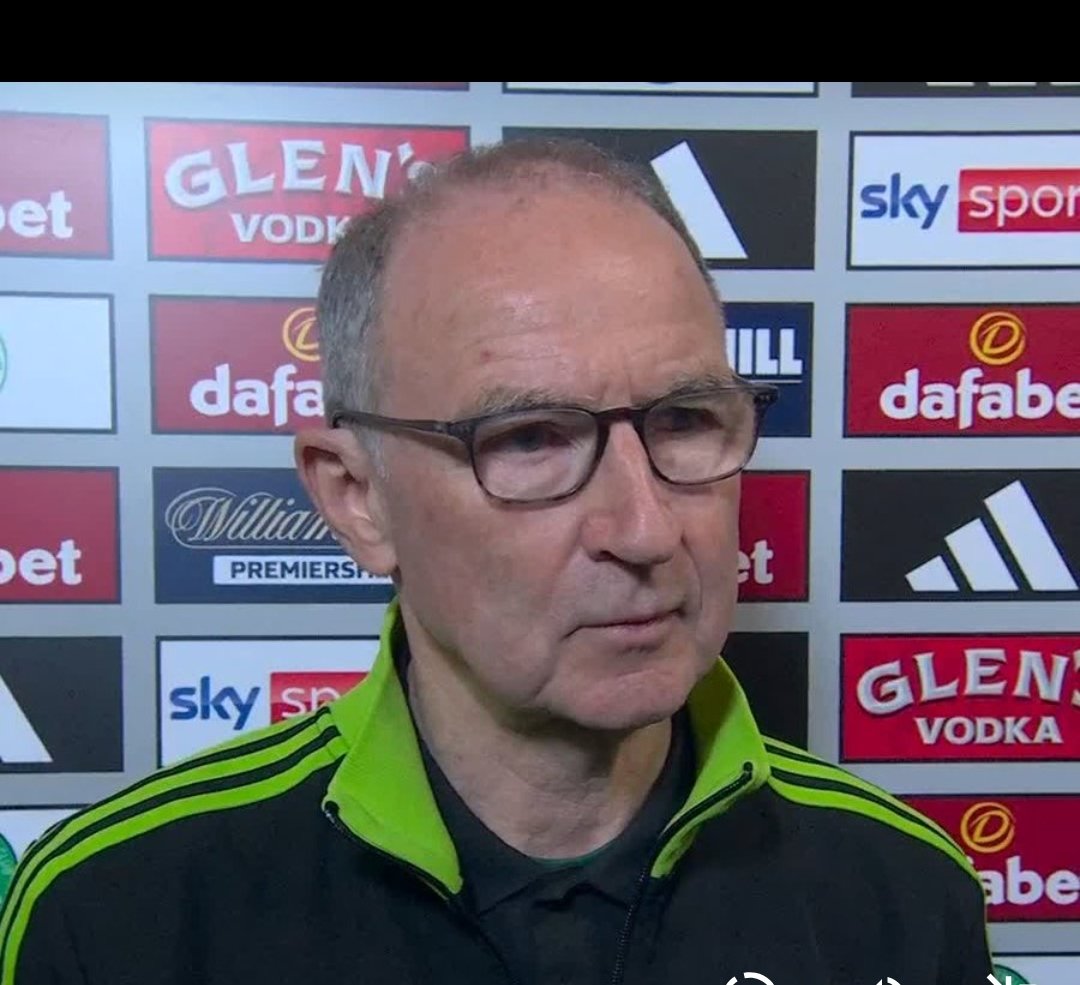
Ex-Celtic Star Eyal Berkovic Brands Martin O’Neill ‘Evil Haman of Football’ and Admits Praying for Hoops Defeat in Title Decider – An In-Depth Look at a 26-Year Grudge
In a remarkable outburst that has sent ripples through Scottish football circles, former Celtic midfielder Eyal Berkovic has unleashed a scathing attack on Celtic legend and manager Martin O’Neill. Speaking on his Israeli podcast The Magician and His Sons, the former Israel international labelled the 74-year-old O’Neill the “evil Haman of football” and confessed to praying that Celtic would lose their dramatic final-day Scottish Premiership title-clinching match against Hearts.
The comments come just days after O’Neill, in what many are calling a miraculous interim return, steered Celtic from six points behind to victory in the league on the final day of the 2025/26 season before completing a domestic double. The 3-1 victory over Hearts secured a fifth consecutive league title and added yet another chapter to O’Neill’s legendary Celtic story. Yet rather than celebrating the achievement, Berkovic admitted he was devastated by the outcome, reigniting a feud that has lingered for more than a quarter of a century.
The Biblical Comparison That Shocked Celtic Supporters
Berkovic’s choice of language carried significant cultural and religious symbolism. In the Book of Esther, Haman is portrayed as the chief villain who plots the destruction of the Jewish people. By comparing O’Neill to such a figure, Berkovic elevated his criticism far beyond football and into deeply personal territory.
“I watched the Celtic match against Hearts and I was really gutted. The whole stand is full of Palestinian flags. And worst of all… who’s on the touchline? Martin O’Neill, the one who sacked me. To me, Martin O’Neill is the evil Haman of football. So I was really p***ed off by what happened. I prayed the whole game they would lose. Honestly, I was heartbroken they won it.”
The comments immediately generated headlines across Scotland and beyond, with many supporters expressing disbelief that a disagreement dating back more than 26 years could still provoke such a strong reaction. Berkovic’s words reflected not only disappointment over Celtic’s success but also a deep resentment that appears to have remained unresolved since his departure from Parkhead.
“I Wanted Out After One Game”
Berkovic went on to reveal just how unhappy he felt during his short-lived Celtic career, claiming he wanted to leave the club almost immediately after making his debut.
“I was their biggest transfer of all time there. They sent a helicopter to sign me. The first game, we had to go on a three-hour drive to Aberdeen and we put on a show and won 5-0. I set up three of the goals. On the way back, I was on the phone to my agent Pini Zahavi and I told him, ‘If you don’t find me a new club tomorrow, I am not working with you again.’ I wanted out of there after one game.”
For many Celtic supporters, the revelation only reinforced the perception that Berkovic never fully committed himself to the club. While his technical talent was never questioned, critics argue that his attitude and desire to remain in Glasgow were evident problems from the outset.
The £5.75 Million Signing That Never Delivered
To understand the roots of the dispute, it is necessary to revisit the summer of 1999. Celtic, under manager John Barnes, paid a club-record £5.75 million to sign Berkovic from West Ham United. The move was viewed as a major statement of intent from a club desperate to challenge Rangers and re-establish domestic dominance.
Berkovic arrived with an impressive reputation. During his time in the English Premier League he had showcased exceptional vision, creativity and passing ability. Celtic supporters expected him to become one of the league’s standout performers, and his dramatic helicopter arrival only heightened the excitement surrounding the transfer.
Initially, everything appeared to be going according to plan. Berkovic produced an excellent debut performance during Celtic’s 5-0 demolition of Aberdeen, registering three assists and displaying the qualities that had convinced the club to invest such a significant fee.
However, the optimism did not last long. Barnes’ reign quickly unravelled, culminating in the infamous Scottish Cup defeat to Inverness Caledonian Thistle. The result remains one of the most shocking upsets in Scottish football history and ultimately cost Barnes his job.
When Martin O’Neill arrived in 2000, he inherited a squad that required major rebuilding. The new manager moved swiftly to reshape the team according to his own vision, and Berkovic soon found himself pushed to the fringes.
Playing opportunities became increasingly scarce. Berkovic struggled to establish himself within O’Neill’s plans and eventually departed on loan to Blackburn Rovers before later securing a permanent move to Manchester City.
A Relationship Beyond Repair
The breakdown between player and manager became increasingly public. Berkovic openly criticised O’Neill for failing to communicate clearly about his future, while O’Neill responded by suggesting the midfielder should focus on producing performances on the pitch rather than speaking through the media.
From that point onward, the relationship appeared irreparable. Berkovic would later describe Scottish football in highly unflattering terms, comments that further damaged his standing among Celtic supporters.
While football is filled with examples of players who struggle under one manager before thriving under another, Berkovic’s situation never improved. By the time he left Scotland, both sides appeared relieved to move on.
Martin O’Neill’s Enduring Legacy
If Berkovic’s Celtic career is remembered largely as a disappointment, O’Neill’s legacy occupies the complete opposite end of the spectrum.
During his first spell at Celtic between 2000 and 2005, O’Neill transformed a struggling club into a dominant force. His team secured the domestic treble in 2001, captured multiple league titles and reached the UEFA Cup Final in Seville in 2003.
Under his leadership, players such as Henrik Larsson, Chris Sutton, John Hartson and Stiliyan Petrov became central figures in one of the most successful Celtic teams of the modern era. His motivational skills, tactical intelligence and ability to foster a winning mentality earned widespread admiration.
His dramatic return during the 2025/26 campaign only strengthened that reputation. Taking charge with Celtic trailing by six points, O’Neill inspired a remarkable turnaround that culminated in another league title and a domestic cup triumph.
For many supporters, it was yet another reminder that O’Neill possesses a unique ability to deliver success under pressure. Few managers in Celtic history enjoy such universal admiration.
Fan Reaction: “A 26-Year-Old Grudge”
Reaction to Berkovic’s comments was swift and largely unsympathetic. Across social media platforms, Celtic supporters dismissed the remarks as evidence of a long-standing bitterness that has never faded.
- “Hartson didn’t kick him hard enough.”
- “Scraping the bottom of the barrel again.”
- “A 26-year-old grudge repackaged as breaking news.”
- “Why are we still talking about this?”
Many fans pointed out that while O’Neill remains celebrated as one of Celtic’s greatest managers, Berkovic’s contribution to the club is largely remembered as an expensive transfer that failed to meet expectations.
Previous Controversies and Growing Distance from the Celtic Support
This is not the first time Berkovic has found himself at odds with sections of the Celtic fanbase. In recent years he has criticised supporters over pro-Palestinian displays at matches and has spoken publicly about the Israel-Gaza conflict.
Those comments generated significant debate and further widened the gap between the former midfielder and a support that once welcomed him as a marquee signing.
Today, Berkovic enjoys a successful media career in Israel, working as a television pundit and podcast host. Yet despite the passing years, his experiences in Glasgow continue to provoke strong emotions.
A Tale of Two Legacies
The contrast between Berkovic and O’Neill’s football journeys could hardly be more striking.
Berkovic enjoyed a respectable playing career, including spells with Manchester City and continued success in Israel. However, his time at Celtic remains one of the most frustrating chapters of his professional life.
O’Neill, meanwhile, built a managerial résumé that includes achievements with Leicester City, Celtic, Aston Villa, Sunderland and the Republic of Ireland national team. His reputation as one of the finest managers of his generation remains firmly intact.
His latest success at Celtic has only enhanced that standing, demonstrating that even in his seventies he retains the ability to inspire players and deliver trophies.
Legacy and Lessons
Football history is filled with fascinating “what if” scenarios. What if John Barnes had succeeded? What if Berkovic had been given a more prominent role under O’Neill? Could one of Celtic’s most talented signings have become one of its most influential players?
Those questions will never be answered. What history does show is that O’Neill’s decisions helped create one of Celtic’s most successful eras, while Berkovic’s Parkhead adventure became a cautionary tale of unrealised potential.
More than 26 years later, Berkovic’s latest comments reveal that the wounds from that period have never fully healed. While Celtic supporters continue celebrating O’Neill’s achievements, Berkovic remains haunted by a chapter of his career that did not unfold as he had hoped.
As Celtic look towards the future, this extraordinary dispute serves as a reminder that while clubs evolve and move forward, personal rivalries can endure for decades. For Berkovic, Martin O’Neill may remain the man who ended his Celtic dream. For the vast majority of Celtic supporters, however, O’Neill will always be remembered as the manager who helped build a dynasty.