
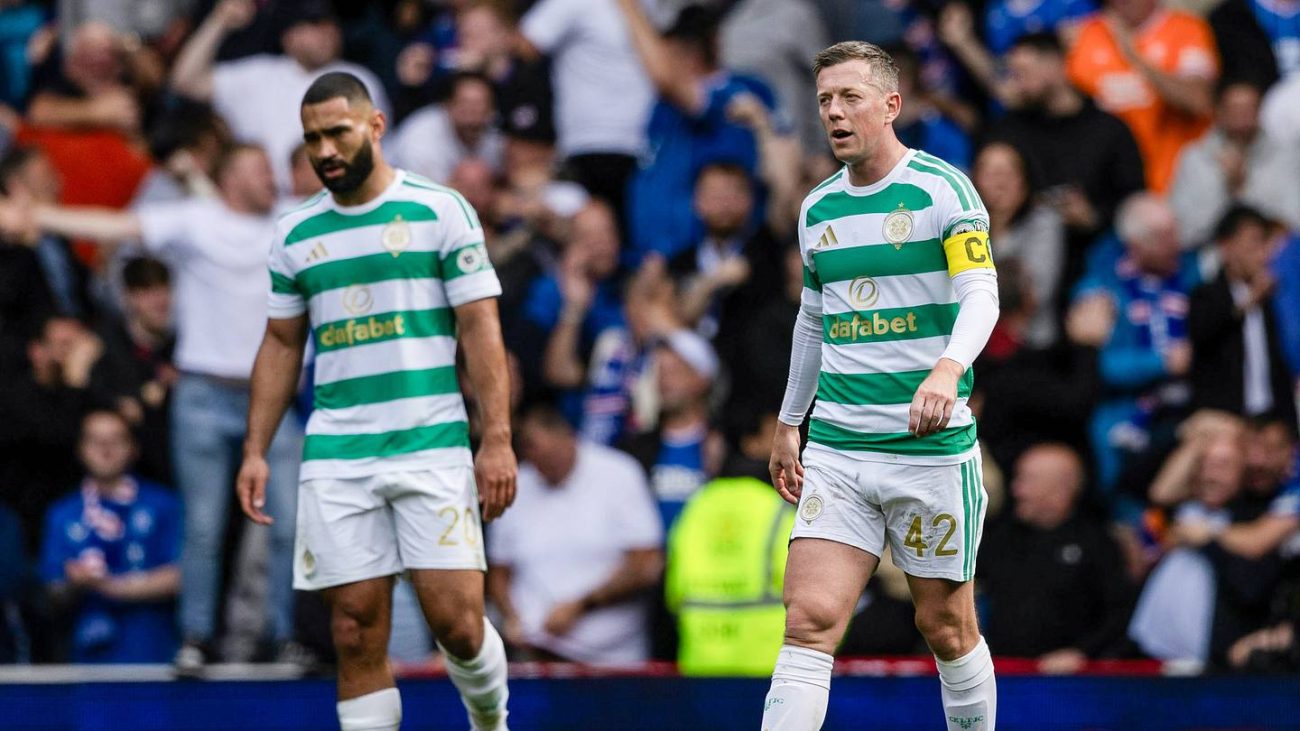
Callum McGregor has offered a candid assessment of Celtic’s current issues, and the comments are already sparking debate among supporters and observers.
The captain pointed to a lack of clear positional profiles across the team, suggesting players are drifting from their intended roles too often.
His remarks echo earlier honesty from Cameron Carter-Vickers, who spoke about “random” football and the need for a clearer script.
The difference in reaction to the two interviews raises questions about consistency in how player comments are received.
McGregor made his points in a club interview rather than in the immediate aftermath of a match. That setting has not prevented the substance of what he said from resonating.
McGregor’s Clear Diagnosis
The captain was direct. “I agree. You are seeing a lot of that. It’s not really having a nailed-on profile for each of the positions.
The players behave like a winger, or they behave like a striker.”
He continued: “You can get away with it for a few games but if it’s a striker playing as a winger, you are going to get that behaviour a lot of the time. You’ve got enough quality so you can score goals and get away with it.
But we have to try to get the team functioning the way it should.”
Those words cut to a recurring theme in Celtic’s recent performances. Domestic dominance has masked structural problems that become obvious against stronger European opposition.
The Carter-Vickers Parallel
Only weeks earlier, Cameron Carter-Vickers faced heavy criticism after suggesting the team were playing without a clear pattern. Pundits lined up to insist he should have kept his thoughts private.
At the time, Carter-Vickers made clear he backed Martin O’Neill. He simply identified an issue with the way the side was functioning. The backlash focused more on the messenger than the message.
McGregor has now said something very similar. The question is whether the response will be equally severe or whether his status as club captain and long-serving leader will soften the reaction.
Why the Difference in Reception Matters
Carter-Vickers has been one of Celtic’s more consistent performers this season. Criticising his form as a way to dismiss his comments never stacked up. The defender has largely been reliable at the heart of the back line.
McGregor, by contrast, has endured a more mixed campaign, particularly in Europe. Yet his stature within the club and among the support is immense. That reality may shape how his latest interview is framed.

The underlying principle should be the same. Senior players are entitled to diagnose problems when they see them. Honesty delivered constructively is not disloyalty.
An Easily Identifiable Pattern in Europe
Celtic have conceded similar goals repeatedly in the Europa League. The ball is played out from the back, the holding midfielders are drawn too deep or too narrow, and space opens in front of the defence.
McGregor is often left scrambling to recover from a deeper position. By the time he arrives, the opponent has already shaped a shot from the edge of the box. The pattern has become familiar and costly.
That is not solely a McGregor issue. It points to a collective lack of positional discipline and a midfield structure that can be stretched too easily against organised sides.
Tactical Adjustments Are Available
Several straightforward changes could improve balance. Kasper Høgh has struggled for form and rhythm. Leaving him out would free Camilo Durán to operate centrally, where his movement and link-up play are more natural.
Haissem Hassan could then occupy the right side with greater freedom. On the left, Callum Osmand has filled in, but Jota and Yang Hyun-jun are progressing toward full fitness. Sebastian Tounekti remains another option even if his recent displays have been patchy.
These are not radical overhauls. They are selections that restore clearer roles and reduce the tendency for players to drift into positions that do not suit their strengths.
Domestic Strength Cannot Hide Everything
Celtic remain top of the Scottish Premiership and continue to collect points at a healthy rate. High pressing and individual quality have been enough to overcome most domestic opponents.
European nights have told a different story. Defeats have exposed a side that can look disjointed when the game becomes transitional or when the opponent refuses to sit deep. The gap between the two levels of performance is the real concern.
McGregor’s comments recognise that quality alone is no longer sufficient. Structure and role clarity are required if results against stronger sides are to improve.
The Midfield Question Lingers
Celtic have asked a great deal of McGregor for several seasons. He has delivered leadership, goals and control more often than not. This campaign has been harder.
Part of the difficulty stems from the lack of a true pivot partner with the legs and defensive instincts to sit alongside him. Without that protection, McGregor is frequently forced to cover more ground than is ideal.
That is not an attack on the captain. It is recognition that the squad was not adequately reinforced in a key area. The consequences are visible in the goals conceded from midfield transitions.
Players Speaking Out Should Not Be Rare
Football dressing rooms are not meant to be silent. When senior professionals identify issues, the healthiest response is to examine the substance rather than the source.
Carter-Vickers was entitled to his view. McGregor is equally entitled to his. Both men have shown they care about standards and results. That should be welcomed rather than punished.
The alternative is a culture in which only bland, risk-free answers are acceptable. That approach rarely helps a team solve its problems.
What Happens Next Will Be Revealing
The coming days will show how McGregor’s interview is covered. Some voices will focus on the need for greater positional discipline. Others may attempt to turn the story into a question of authority or dressing-room harmony.
The more useful conversation centres on the football itself. Can Celtic restore clearer roles quickly? Will selection reflect the need for better balance? Are there realistic reinforcements or internal solutions available?
O’Neill has a squad with enough quality to compete on two fronts. The challenge is organising that quality so that individual strengths are not cancelled out by collective vagueness.
Fan Reaction and the Bigger Picture
Supporters have largely responded to McGregor’s comments with recognition rather than outrage. Many have seen the same patterns themselves and appreciate a senior player acknowledging them openly.
There is still strong backing for the manager and the squad. The frustration is directed at recurring structural issues rather than at any single individual. That distinction matters.
Celtic remain in a strong domestic position. Closing the gap between Premiership performances and European displays is the next test of progress under O’Neill.
Leadership Comes in Different Forms
McGregor has led by example for years. Speaking honestly about the team’s functioning is another form of leadership, provided it is followed by collective effort to improve.
Carter-Vickers did the same when he spoke earlier. Both men deserve to be judged on the accuracy of their observations rather than on whether their words made comfortable listening.
The club’s response on the pitch will ultimately matter more than any single interview. Clearer roles, better midfield protection and smarter selection can address the problems both players have identified.
A Moment for Consistency
Media and pundit reaction will be watched closely. Treating McGregor’s comments with greater tolerance than Carter-Vickers received would confirm a double standard based on reputation rather than substance.
Both players expressed concern about the same core issue: a team that sometimes lacks a fixed shape and clear individual responsibilities. That diagnosis deserves serious consideration regardless of who delivers it.
Celtic have the talent to function at a higher level. The captain has stated the problem plainly. The response from the coaching staff and the wider squad will determine whether the words lead to improvement.
In the end, players who care enough to speak honestly about standards should not be discouraged. McGregor has every right to make those comments, just as Carter-Vickers did before him. The healthiest outcome is that the conversation helps the team move forward with greater clarity and purpose.