

“I Thought It Was Finished”: Newcastle Star Feared Career Was Over After Injury Complications
A Newcastle United star has admitted that he was concerned about his career after suffering an ankle injury last season.
The admission came as he reflected on a difficult period that tested him both physically and mentally over many months.
The Switzerland international picked up the injury in January when Newcastle took on Leeds.
It was a moment that changed the course of his season in a significant way and left him facing a long road back to full fitness.
It ended the season early for the 34-year-old and led to an initial 93-day absence. That saw him miss 21 games between January and April.
The length of time away from the pitch was longer than many had first expected when the injury occurred.
He had been expected to return at that point, but the injury required surgery, seeing him miss another 32 days and five games.
The need for further medical intervention extended the recovery timeline beyond the original forecast and added more frustration to the process.
Then a further ankle injury added another 18 days and two game absence.
This additional setback meant the total time spent on the sidelines continued to grow and delayed any chance of an earlier return to competitive action.
The player subsequently only returned to action at the end of August, coming on for one minute in the 2-2 draw with Liverpool. He then spent three games on the bench before a 24-minute substitute appearance in the 2-1 win over Hull in September.
Those limited minutes marked the beginning of his gradual reintroduction to the squad.
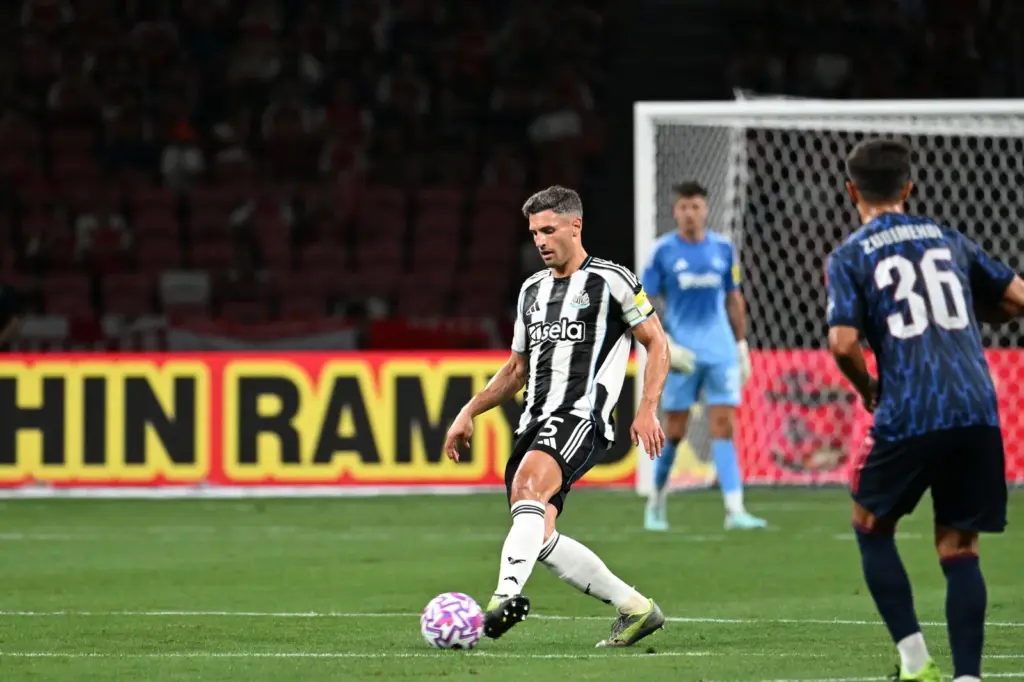
Fabian Schär has slowly been working his way back to fitness since then. But he admits that he was concerned his career could be over.
The seriousness of what he faced left him with genuine doubts during the hardest stages of the recovery.
“It (his return) was more significant than other times,” he told SRF Sport. The words reflected how different this particular comeback felt compared with previous injuries he had dealt with during his career.
“Knowing everything I had to overcome just to get back on the pitch. That really affected me.
You try to appreciate the situation even more and not take it for granted.” The experience forced a deeper level of reflection on the value of being able to play again.
“Yes, that (his career being over) actually crossed my mind. The “complications” were quite serious. During that time, I doubted whether things would ever function the way they used to.”
Those thoughts were part of a difficult mental battle that ran alongside the physical rehabilitation.
“But I didn’t give up. I tried to keep a positive outlook. The fact that Newcastle extended my contract early gave me the peace of mind I needed.”
The support from the club played an important role in helping him stay focused on the recovery process.
Fortunately for Fabian Schär, he has returned for another season at St James Park. That was made possible by the club deciding to extend his contract earlier this year.
The decision provided stability at a time when uncertainty could easily have grown.
The Magpies did so despite him still being in the middle of the recovery from his ankle injury. It was a sign of faith that he particularly appreciated. The timing of the contract offer showed belief in him even while he was still working his way back to full fitness.
“It’s definitely a sign of appreciation,” he added. The words underlined how much the gesture meant during a challenging period in his career.
“The club knows what they have in me. Before the injury, I was in good form and playing a lot.
However, it’s not as if Newcastle extended my contract the very first day after the injury occurred.” He recognised that the decision had been carefully considered rather than rushed.
“For the club, too, it was a matter of weighing things up. I’m not exactly young anymore, and in the Premier League, in particular, it’s not easy to secure a new contract at my age.”
The realistic view of his age and the demands of the league formed part of his understanding of the situation.
By the end of the season, he will have completed nine years at Newcastle. And he insists that means a lot to him. The length of time spent at the club has created a strong sense of belonging that goes beyond the pitch.
“When you’ve been with a club for so long, you grow attached not just to the club itself, but to the city as well,” he concluded. The connection he described has developed steadily over the years spent living and playing in the area.
“The people here live for Newcastle United. I feel extremely comfortable here; it has become a second home to me.”
Those closing remarks captured the depth of feeling he has developed for both the club and the place that has been his base for so long.
The Switzerland international’s comments painted a clear picture of a player who faced real uncertainty. The ankle injury that began in January against Leeds set off a chain of absences that stretched across many months and multiple further complications.
The initial 93-day period already represented a major interruption. Missing 21 games between January and April removed him from a large portion of the campaign and left him watching from the outside as the season continued without him.
Expectations of a return after that first long absence were then pushed back by the need for surgery. Another 32 days and five more games were added to the total time away.
The further ankle problem that followed brought an extra 18 days and two additional matches missed.
Only at the end of August did the first on-pitch minutes arrive, limited to a single minute against Liverpool.
Three further games were spent entirely on the bench before the 24-minute substitute appearance against Hull in September offered a slightly longer opportunity to contribute.
Throughout the slow return to fitness, the concern about whether the career might be finished remained a real thought.
The complications that arose were described as quite serious and led to genuine doubts about whether the body would ever respond in the same way again.
Keeping a positive outlook became essential. The early contract extension from the club supplied the peace of mind that helped maintain that outlook.
It arrived while recovery was still ongoing and therefore carried extra significance.
The decision to offer another year was viewed as clear appreciation.
Form before the injury had been good and involved regular selection, yet the club still took time to weigh the situation carefully rather than acting immediately.
Age was acknowledged as a factor. Securing a new deal in the Premier League at this stage of a career is not straightforward, and the player understood the calculations the club had to make.
Nine years with the same club by the end of the current season represents a substantial period.
Attachment has grown not only to the team but also to the city and its people, who live for the club in a way that has made the place feel like a second home.