

European football is a multi-billion-pound industry where sporting outcomes collide with sophisticated financial engineering.
Clubs treat elite players as balance-sheet assets.
Sportsbooks balance vast liabilities across sportsbook odds markets. Insurers underwrite everything from career-ending injuries to stadium disasters.
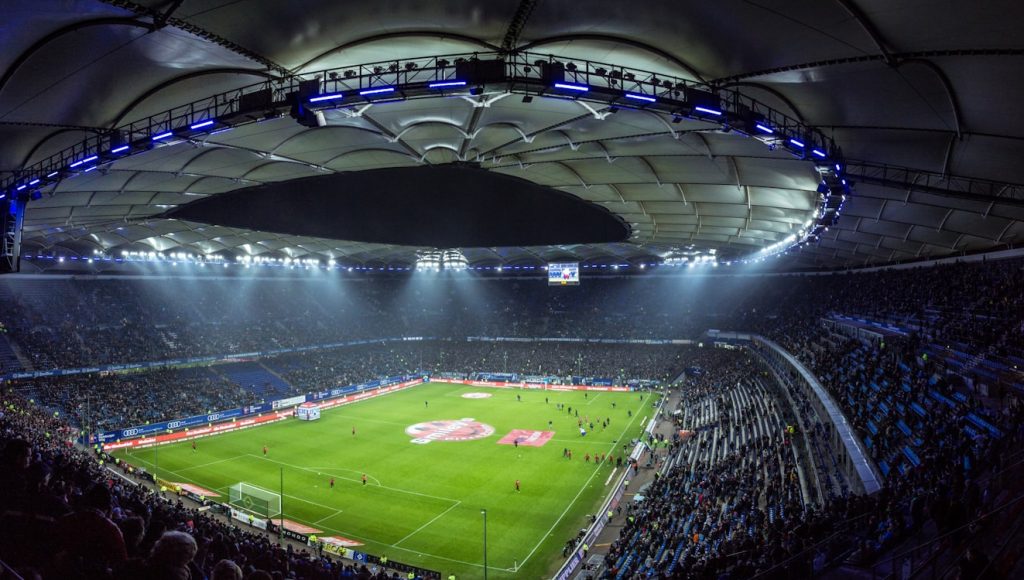
Understanding these interlocking systems reveals how modern sports entertainment actually works.
The same principles that price a Champions League match also shape premiums, contract guarantees, and consumer protections under the UK Gambling Commission.
Player Valuation & Contract Guarantees
Elite clubs value players through a blend of performance data, remaining contract length, age, nationality, and market comparables.
Transfer values for top talents routinely exceed €100 million, with some young stars approaching or surpassing €300 million in estimated fair value.
These figures appear on club balance sheets as intangible assets under accounting standards. The registration right is capitalised and amortised over the contract term.
A sudden long-term injury can trigger immediate impairment charges and lost commercial revenue.
Clubs therefore structure contracts with carefully calibrated guarantees.
Base salaries are often supplemented by appearance bonuses, performance clauses, and image-rights arrangements. Buy-out clauses and release provisions further protect both parties.
To hedge the financial exposure, many clubs purchase Key Person Insurance and specialised disability coverage.
These policies, underwritten by specialist markets, can cover salary continuation, permanent total disablement, or loss of value relative to expected future earnings.
Underwriters assess risk using medical histories, playing position, injury patterns, and even expected minutes data.
Premiums reflect the player’s age, position, and the size of the sum insured. A career-ending injury for a high-value forward can generate multi-million-pound claims that protect the club’s asset base and wage bill.
Squad planning also incorporates insurance-backed contingency.
Clubs maintain depth and use medical and performance staff to reduce the probability of claims.
The result is a sophisticated risk-transfer ecosystem that sits alongside the pure sporting assessment of talent.

How Sportsbooks Price Betting Odds & Manage Risk
Sportsbooks do not simply offer opinions on match outcomes. They construct markets that embed a mathematical edge known as the overround (or vigorish).
In a three-way football market, the sum of implied probabilities typically exceeds 100 percent by 5–8 percent or more on retail books.
This margin ensures long-term profitability even when individual results deviate from expectation. Sharper books may operate with tighter overrounds of 2–4 percent on major markets.
Pre-match odds are built from statistical models, historical data, team news, and market feedback. Once betting opens, liability balancing becomes continuous.
If one side of a market attracts disproportionate money, the bookmaker shortens those odds and lengthens the other side to restore equilibrium.
Live in-play betting intensifies the challenge.
High-frequency data feeds deliver real-time event data—goals, cards, substitutions, and possession metrics—within seconds. Models incorporating expected goals (xG) and other advanced metrics update probabilities continuously.
During high-stakes Premier League or Champions League fixtures, aggregate liabilities can reach tens of millions of pounds across correlated markets.
Risk teams monitor exposure in real time, hedge with other operators or trading partners, and adjust limits.
Player props and exotic markets carry higher overrounds because liquidity is thinner and information asymmetry greater. The core discipline remains the same: convert uncertain sporting outcomes into a managed portfolio of risks while preserving the overround edge.
High-Impact Comparison Table
| Risk Area | Core Protection Mechanism | Typical Risk Level | Key Stakeholders Involved |
|---|---|---|---|
| Match Liability | Overround pricing, real-time liability balancing, hedging | High | Sportsbooks, trading desks |
| Player Disability | Key person & permanent total disablement policies | High | Clubs, specialist underwriters |
| Venue Property Insurance | Property damage, business interruption cover | Medium-High | Clubs, stadium operators, insurers |
| In-Play Odds Hedging | Live data feeds, dynamic odds adjustment, limits | Very High | Sportsbooks, data providers |
| Spectator Liability | Public liability policies, safety management systems | Medium | Clubs, local authorities |
| Match Cancellation | Event cancellation & contingency insurance | Medium-High | Clubs, broadcasters, insurers |
This comparison illustrates how different commercial sports risks are ring-fenced through distinct instruments. Match liability and in-play exposure demand continuous active management. Player and venue risks rely more on traditional commercial insurance and liability policy structures.
Regulatory Standards & Consumer Protection
In the United Kingdom, the UK Gambling Commission sets the framework that governs licensed operators.
Since April 2020, operators have been prohibited from accepting credit card payments for gambling.
The ban extends to payments routed through money service businesses or e-wallets funded by credit cards.
Mandatory Know Your Customer (KYC) checks form another pillar. Operators must verify identity and, on a risk-based basis, source of funds.
Recent regulatory focus has highlighted sophisticated attempts to circumvent verification using AI-generated documentation, reinforcing the need for robust controls.
All remote operators must integrate with GAMSTOP, the national multi-operator self-exclusion scheme. Consumers who register are blocked from licensed sites for the chosen period. These measures sit alongside broader requirements for affordability checks, interaction monitoring, and transparent terms.
The regulatory architecture aims to protect consumers while allowing a competitive market for sportsbook odds.
Compliance costs are significant, yet they form part of the licence conditions that enable operators to offer products to UK customers. Similar principles influence licensing regimes in other major markets, though the precise tools—credit restrictions, self-exclusion, and verification standards—vary by jurisdiction.
Stadium Infrastructure & Commercial Liability
Modern stadiums are complex commercial assets generating matchday revenue, hospitality income, and non-matchday events.
Property insurance covers physical damage from fire, weather, or other perils. Business interruption cover addresses lost revenue when a venue cannot operate.
Spectator liability is managed through public liability policies and rigorous safety protocols. Clubs work with local safety advisory groups, police, and licensing authorities to maintain stadium safety certificates.
Match cancellation or postponement creates further exposure. Weather, security concerns, or force majeure events can trigger losses for clubs, broadcasters, and sponsors. Specialised event cancellation insurance can indemnify against these scenarios, though coverage terms and exclusions are carefully negotiated.
Underwriters evaluate construction standards, historical claims, crowd management systems, and contingency planning when setting premiums.
High-profile fixtures and large capacities push limits into the tens or hundreds of millions of pounds. The result is a layered liability policy structure that protects the commercial engine of the club.
Conclusion & Key Takeaways
The financial mechanics of European football rest on three interconnected disciplines: asset valuation and protection by clubs, probabilistic pricing and liability management by sportsbooks, and specialised risk transfer by insurers.
Player contracts and disability coverage convert human performance into balance-sheet items that can be insured. Sportsbook odds embed an overround that funds operations while real-time systems manage in-play exposure. Stadium and match risks are absorbed by property, liability, and cancellation policies whose premiums reflect sophisticated underwriting.
Regulatory oversight, particularly from the UK Gambling Commission, adds mandatory consumer protections that shape how operators accept funds and verify customers. Together these systems allow multi-million-pound risks to be quantified, priced, and transferred so that the spectacle on the pitch can continue.
For sports fans, betting enthusiasts, and industry professionals, recognising these layers transforms the viewing experience. Every goal, injury, or market movement sits inside a carefully engineered web of contracts, models, and commercial insurance. That web is what makes modern European football both a sporting contest and a high-stakes economic enterprise.