
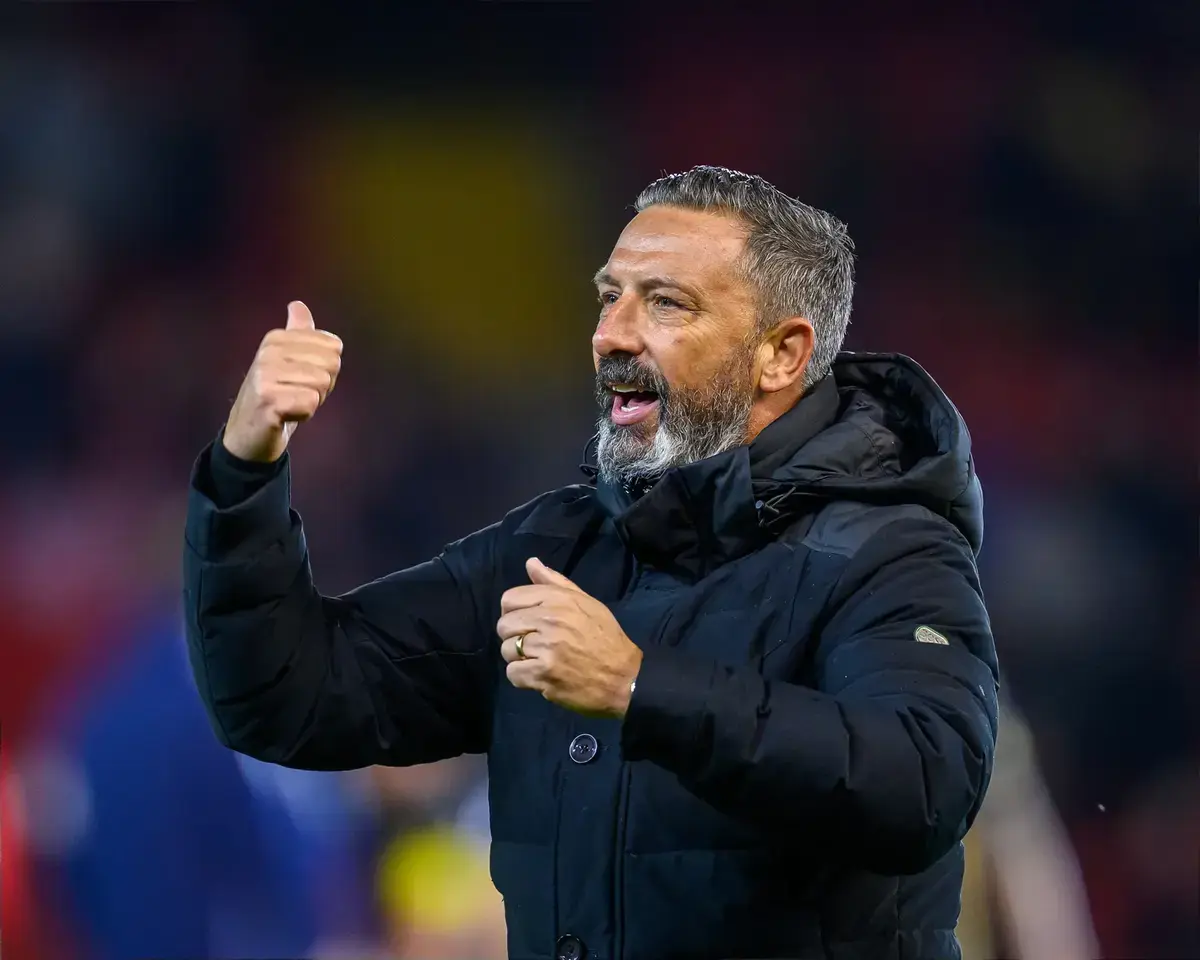
“I thought we gave up too many chances and gave teams too much encouragement. We’ve got to be honest and say we are guilty of beating ourselves tonight. And that’s no disrespect to our opponent because on transitions and counter-attack, it fuels them.”
Those were the words of Derek McInnes in the aftermath of Rangers’ latest European setback. They were measured, clear and, above all, honest. In the cold light of another difficult night on the continent, the new Rangers manager did not hide behind excuses or external factors.
He pointed the finger squarely at his own side. And in doing so, he put a name to the exact problem that has followed this club around for longer than most supporters care to admit.
The pattern was set early in Bialystok. Jagiellonia did not need to invent anything elaborate.
They simply waited for Rangers to gift them the openings and then punished them without mercy. Inside the opening quarter of an hour the Polish side had already carved the Gers open more than once. A string of lapses in concentration turned what should have been a controlled start into a scramble for survival.
One moment stood out above the rest. A loose turn from Thelo Aasgaard on the edge of the hosts’ box was seized upon within seconds. The counter-attack that followed was clinical and decisive. From that point the Light Blues spent a flat, flailing first half chasing the game.
Every time they tried to build, the ball seemed to come back at them with interest. The midfield was stretched. The full-backs were left exposed. The back line looked unsure whether to step up or drop off. The result was a familiar and deeply uncomfortable sight for anyone who had watched Rangers with any regularity last season.
It was less a collapse than a relapse. The exact failure mode supporters sat through far too often under previous regimes returned with almost clinical precision. Fluid moments going forward were repeatedly undone by a single transition.
One misplaced pass, one heavy touch, one moment of hesitation, and the opposition were away. In Bialystok those moments arrived early and kept arriving. By the time the interval arrived, the damage was already significant and the sense of déjà vu was overwhelming.
A Pattern, Not a One-Off
The uncomfortable truth for Rangers supporters is that none of this is new. Last season the team could look sharp and purposeful in possession, capable of creating clear chances and scoring attractive goals, yet still find itself undone by the simplest of counters. That is precisely how the goals arrived in Poland. The opposition did not need to dominate the ball or invent intricate patterns of play. They simply needed Rangers to gift them the ball in dangerous areas and then run at the spaces that opened up behind the defence.
When Rangers’ unwanted European records tumbled on the night, it felt less like a shock than a rerun. The same soft goals, the same lack of control in the decisive moments, the same inability to manage transitions cleanly. Supporters have seen this film before.
The only difference is the man standing on the touchline. McInnes naming the issue in public is at least the first step towards treating it. Acknowledgement matters. Without it there can be no meaningful improvement. Yet acknowledging a problem and solving it are two very different things.
Delivering change is another matter entirely. The manager has only been in the building a matter of weeks. He inherited a squad that had already shown these frailties and has spent the summer trying to reshape it. Nine signings represent a serious attempt at surgery. A rebuilt spine cannot be expected to gel perfectly in a fortnight. Chemistry takes time. Understanding of roles takes time. The ability to defend as a unit when the ball is lost takes time. None of that is an excuse for the performance in Bialystok, but it is important context.
Still, the early evidence is not entirely reassuring. The same soft transitions that haunted the side last season reappeared with worrying ease. The same tendency to leave space in behind. The same failure to protect the ball in the middle third when under modest pressure. These are the habits that turn promising spells of possession into dangerous counter-attacks for the opposition. They are the habits that turn tight games into lost ones. And they are the habits that supporters have grown thoroughly sick of watching.
Rangers Have Time, But the Concerns Are Real
There is time. The Europa League tie is only half done. The second leg at Ibrox on 13 August will take place in front of a full house, and that environment has a habit of changing the temperature of a match. Home support can lift players, raise intensity and force opponents into mistakes they would not make on their own patch. A different night, a different atmosphere, and the picture can shift. The league campaign also continues, with the first home fixture against Hibernian scheduled for Sunday. Points and performances in the Premiership will shape the mood far more than a single European result, however disappointing.
Yet the message from Poland was blunt and it deserved to be. Until Rangers stop beating themselves, the old habits will keep writing the same ending. The manager knows it. The players know it. The supporters certainly know it. Giving teams encouragement through sloppy turnovers and poor decision-making in transition is a sure way to invite trouble. Jagiellonia did not need to be exceptional. They only needed Rangers to be ordinary in the moments that mattered most.
McInnes has spoken about the need for honesty. That honesty must now be matched by action on the training ground and on the pitch. The ability to recognise when the ball is lost and to react as a unit is not a complicated tactical concept. It is a matter of concentration, organisation and collective responsibility. Those qualities can be coached. They can be demanded. They can be improved. But they will not appear by accident.
The summer recruitment has brought in bodies and, in theory, quality. What it has not yet brought is a settled understanding of how this new group defends together. That understanding will only come through repetition, through shared experience, and through the kind of hard conversations that managers sometimes have to have with players who fall short of the required standard. McInnes has already shown he is prepared to be honest in public. The next step is ensuring that honesty translates into a clear and consistent improvement in the areas that keep costing Rangers.
For all the talk of new eras and fresh starts, the reality of life at Ibrox is that results and performances are judged against the highest standards. Supporters do not expect perfection in the opening weeks of a new managerial reign. They do, however, expect to see signs that the most obvious and repeated failings of the previous campaign are being addressed. Soft goals from transitions are among the most obvious of those failings. They were present last season. They were present again in Bialystok. That is the uncomfortable continuity that no amount of new signings can immediately erase.
The second leg offers an immediate chance to respond. A strong performance at Ibrox would quieten some of the early doubts and give the new group a platform on which to build. A second successive night of defensive frailty would deepen the sense that the old problems have simply followed the club into a new regime. The choice, as McInnes himself acknowledged, is largely in Rangers’ own hands. Stop giving the opposition encouragement and the story can change. Continue in the same vein and the ending will look depressingly familiar.
Over to you, Derek. The diagnosis has been made. The treatment now has to follow. Rangers have time, but they do not have forever. The old habits are already making their presence felt. Whether they are allowed to take root again is the first real test of the McInnes era.